

300 m Rock Coring Project Using a PDC Core Drill Bit
A geological investigation case in mixed sedimentary rock
Rock coring is not simply about drilling a hole. For geological investigation projects, the drilling system must also recover representative rock samples, keep the borehole stable, control cost and reduce needless bit changes.
In this representative 300-meter geological project, a PDC core drill bit was chosen for rock coring through mostly sedimentary formations. The goal was to finish a 300 m exploration hole while recovering continuous rock samples for geological ID and formation study.
Because of this, the project shows an important rule in core drilling: the right core bit should be chosen by the formation, not by depth alone.
Quick summary: A 113 mm PDC core bit was used to core 300 m of mudstone, shale, sandstone and limestone. Stable drilling, good flushing and controlled feed mattered as much as the bit itself. In short, the formation guided the bit choice.
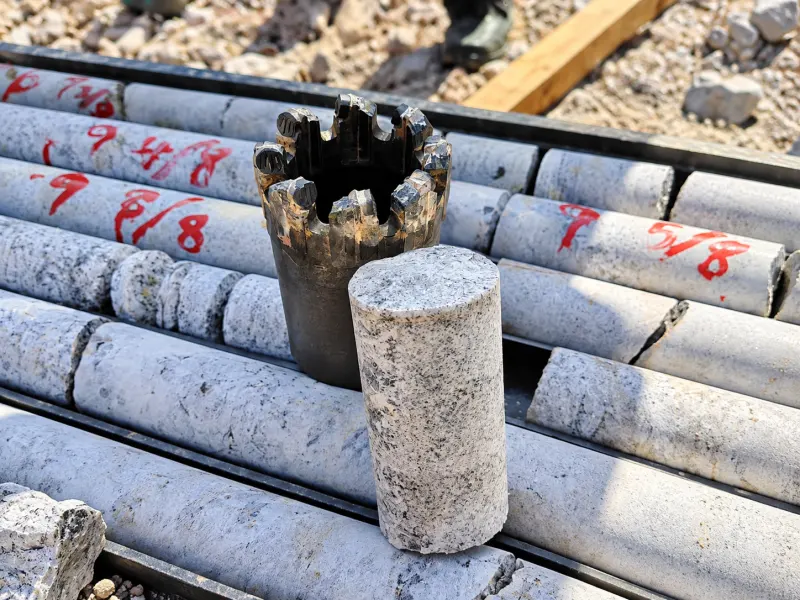
Project Overview
| Item | Detail |
|---|---|
| Application | Geological investigation / rock sampling |
| Final drilling depth | 300 m |
| Drilling method | Rotary core drilling |
| Core bit | PDC core drill bit |
| Nominal bit diameter | 113 mm |
| Typical core diameter | About 75–80 mm, based on the core barrel system |
| Formation | Mudstone, shale, sandstone, limestone intervals |
| Rock condition | Soft to medium-hard, locally fractured |
| Flushing medium | Clean water / water-based fluid |
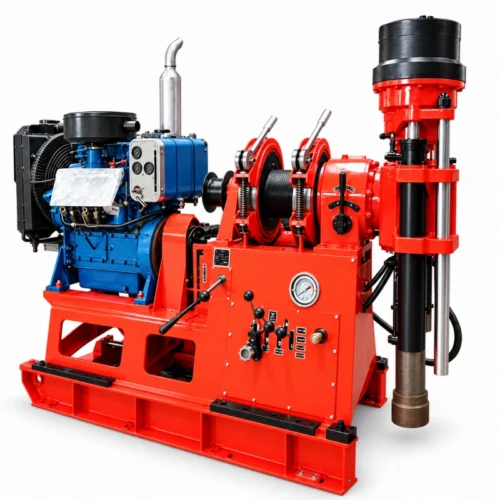
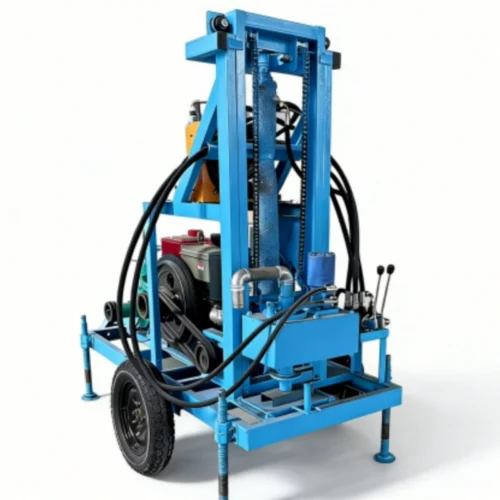
| Rig type | Hydraulic geological core drilling rig |
| Primary goal | Formation ID and rock-core recovery |
The drilling settings described below are working ranges, not fixed rules. Actual RPM, weight on bit and flushing volume should always be adjusted by rig capacity, bit design, borehole condition and formation response.
Geological Conditions
The borehole was expected to pass through several sedimentary layers, not one uniform rock. The representative profile included four main intervals.
0–60 m: Weathered Mudstone and Shale
The upper part was mostly weathered sedimentary material. This section was fairly easy to cut, but it needed enough flushing to stop cuttings building up around the bit.
60–150 m: Mudstone and Sandstone
As drilling went deeper, the rock became more solid. Mixed mudstone and sandstone created changing cutter loads. Because of this, the PDC core bit had to keep both cutting efficiency and drilling stability.
150–230 m: Sandstone With Limestone
This section created higher wear demand. Sandstone abrasiveness and stronger limestone meant that drilling settings had to be controlled, rather than simply pushing more weight on bit.
230–300 m: Limestone and Mixed Sedimentary Rock
The final part was mainly solid limestone mixed with sedimentary layers. At this depth, steady rotation, good flushing and controlled cutter load became very important.
Why a PDC Core Bit Was Selected
Several core bit types can be used for geological work, including:
- PDC core bits
- Tungsten carbide core bits
- Surface-set diamond bits
- Impregnated diamond core bits
For this project, the expected rock was mostly soft to medium-hard sedimentary material. Therefore, a PDC core bit was chosen for its blend of:
- Efficient shearing action
- Good wear resistance
- Stable coring
- Strong penetration efficiency
PDC cutters remove suitable rock mainly by shearing rather than by crushing alone. In mudstone, shale, selected sandstone and limestone, this can give fast penetration when the cutter layout and drilling settings are matched well.
PDC Core Bit Configuration
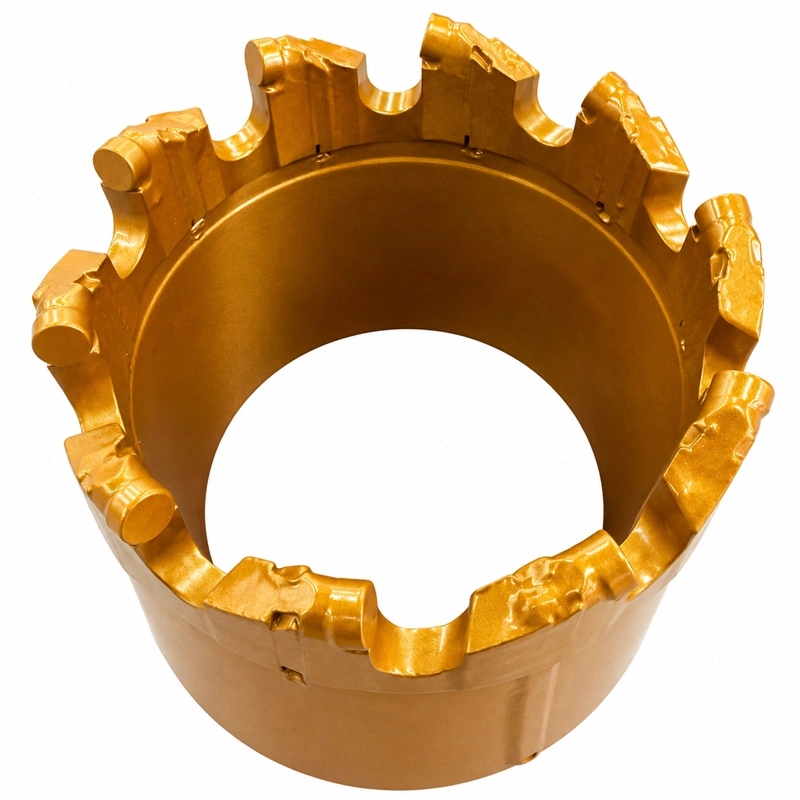
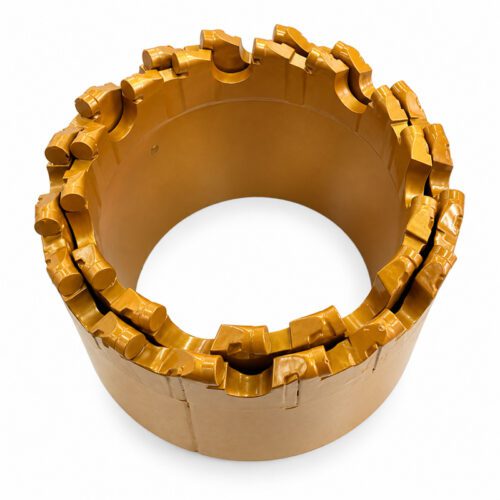
The core bit used in this project had a cutting structure designed for coring. Unlike a full-face PDC bit, a PDC core bit cuts an annular path around the rock. The center stays intact and enters the core barrel as drilling moves on.
The design focused on three main areas.
Balanced PDC Cutter Arrangement
Cutters were spread around the crown to reduce heavy load on single cutting elements. A balanced layout helps improve:
- Drilling stability
- Cutter life
- Wear spread
- Core quality
Open Waterways
Good waterways were built between the cutting structures. Their job was to:
- Remove cuttings
- Cool the PDC cutters
- Clean the cutting face
- Reduce recutting
- Keep penetration steady
Reinforced Gauge
The outside diameter of the bit always touches the borehole wall. Extra wear resistance around the gauge helps keep the required hole size during deeper drilling.
Typical Drilling Parameters
No single setting is right for every PDC core bit. Even so, for a 113 mm PDC core bit in soft to medium-hard rock, the crew may start with moderate settings and adjust them by torque, penetration rate, vibration and cuttings return.
A representative working window could include:
- Rotary speed: about 180–350 RPM
- Weight on bit: moderate, adjusted step by step
- Flushing: steady water flow to keep the bit face clean
- Drilling approach: controlled feed, not heavy axial pressure
These values are not fixed rules. When the rock changes from soft mudstone into stronger sandstone or limestone, RPM and feed should be adjusted to the real drilling behavior.
Key rule: do not use more weight to make up for a bad cutting condition. In short, fix the cause, not the symptom.
Drilling the First 60 Meters
The upper weathered section allowed fairly fast drilling. However, weathered mudstone made fine cuttings that could build up around the blade and cutter areas. Because of this, the crew paid close attention to fluid flow.
Good flushing kept the cutting face open to fresh rock and cut the risk of bit balling. During this section, steady torque and fairly even penetration showed that the PDC cutters were working well.
Transition Into Sandstone
Between about 60 and 150 meters, sandstone became more common. This changed how the bit behaved. Sandstone can vary a lot in abrasiveness depending on its minerals, especially quartz content.
Instead of adding pressure right away when penetration slowed, the crew kept controlled cutter contact and watched:
- Torque
- Penetration rate
- Cuttings
- Vibration
- Fluid return
As a result, they avoided needless cutter overload.
Drilling Through Limestone
Limestone intervals appeared more often as the hole went deeper. PDC cutters can work well in suitable limestone, but limestone strength and abrasiveness vary a lot. Because of this, the approach focused on steady rotation.
Heavy feed pressure was avoided. In fact, a stable PDC core bit often beats an overly aggressive setup, because cutter chipping and vibration can shorten bit life fast.
Core Recovery and Sample Quality
The main goal of this project was not just penetration rate. The hole was being drilled for geological data. Representative core samples were needed to identify:
- Lithology
- Bedding
- Fractures
- Weathering
- Formation changes
Steady drilling helped reduce needless mechanical disturbance to the rock core. Where the rock was solid, fairly intact cylindrical cores could be recovered. In fractured sections, natural breaks reduced core integrity, which shows that core recovery depends not only on the bit but also on the rock mass itself.
Reaching 300 Meters
As drilling neared the final 300-meter depth, good operating discipline became more important. At greater depth:
- Drill-string length grows
- Fluid flow becomes more important
- Trip time grows
- Bit replacement costs more lost drilling time
Because of this, the economic value of a durable bit rises with depth. A bit that costs a little more but cuts needless trips can give a lower total drilling cost. Therefore, the project focused on keeping the cutters in usable condition, not on chasing peak instant penetration.
PDC Bit Wear Inspection
After the planned interval was finished, the bit was checked. The most important areas to look at on a used PDC core bit include:
| Wear Sign | Possible Meaning |
|---|---|
| Cutter wear | Even wear shows fairly balanced cutter load |
| Cutter chipping | Impact, vibration, fractures or wrong settings |
| Shoulder wear | High load or abrasive rock |
| Gauge wear | Abrasive wall contact or weak gauge protection |
| Waterway condition | Erosion or build-up shows flow and rock traits |
Used-bit checks are an important part of improving the next bit choice.
What Made the PDC Core Bit Suitable for This Project?
The result did not depend on one feature alone. In fact, it came from the mix of:
- Formation selection
- PDC cutter layout
- Steady rotary drilling
- Controlled feed
- Good flushing
- Core barrel fit
This is an important lesson for geological drilling teams. A bit should never be judged on its own, apart from the drilling system.
What If Harder Rock Had Been Encountered?
One of the most important calls in professional drilling is knowing when to stop using the same bit type. If the hole had entered long sections of very hard, highly abrasive rock — such as certain quartz-rich or hard crystalline formations — staying with the same PDC core structure may not have been the best economic choice.
Depending on the rock, other tools could include:
- Impregnated diamond core bits
- Surface-set diamond bits
- Other special core drilling tools
Because of this, geological data gathered during drilling should keep guiding the next bit choice.
Lessons From the 300 m Core Drilling Project
Several practical lessons come out of this project.
1. Formation Data Beats Depth Alone
A 300 m hole in soft sedimentary rock and a 300 m hole in hard abrasive rock may need very different tools. Depth alone does not decide the bit.
2. PDC Core Bits Work Best in Suitable Rock
PDC works well where the rock responds to continuous shearing.
3. Flushing Directly Affects Performance
A sharp PDC cutter cannot work well if cuttings keep covering the cutting face.
4. Stable Drilling Can Beat Peak Instant ROP
Heavy feed can create vibration and cutter damage. Longer usable bit life is often worth more than a short burst of high penetration.
5. Used Bits Give Useful Data
Photos of worn cutters and gauge areas can help improve the next bit design.
Customized PDC Core Bits for Geological Exploration
Different geological projects need different core drilling structures. We can review PDC core bit setups based on:
- Outside diameter
- Required core diameter
- Formation
- Cutter spec
- Cutter layout
- Drilling depth
- Core barrel
- Thread connection
- Flushing conditions
Customers can send us:
- Rock photos
- Core samples
- Geological information
- Existing drill-bit photos
- Used-bit photos
- Technical drawings
In short, the more data we have before production, the more accurately the bit can be matched to the project.
Planning a 300 m Rock Coring Project?
If you are preparing a geological investigation or rock-sampling hole, send us the basic drilling data:
- Required drilling depth
- Bit diameter
- Required core diameter
- Main rock formations
- Drill rig model
- Core barrel type
- Thread or connection
- Flushing method
For mixed formations, photos of the rock or earlier core samples are especially useful.
At Chenghui, we believe good core drilling starts with one simple rule: understand the formation before choosing the bit.
Built Around the Formation. Proven in the Borehole.
Chenghui — PDC core drilling solutions for real geological conditions.
From rock sampling to deep core drilling, our tools are matched to the formation, not just the catalogue.
Frequently Asked Questions
Why was a PDC core bit chosen for this 300 m project?
Because the expected rock was mostly soft to medium-hard sedimentary formations like mudstone, shale, sandstone and limestone. In this kind of rock, PDC cutters can shear efficiently and give strong penetration while keeping stable coring.
What drilling parameters were used with the 113 mm PDC core bit?
A representative working window was about 180–350 RPM, moderate weight on bit, steady water flushing and controlled feed. These values are not fixed rules and should be adjusted by formation, rig and bit design.
Why is flushing so important in PDC core drilling?
Because a sharp cutter cannot work well if cuttings keep covering the cutting face. Good flushing removes cuttings, cools the PDC cutters, reduces recutting and keeps penetration steady.
When should I switch to an impregnated diamond core bit?
If the hole enters long sections of very hard, highly abrasive rock — such as quartz-rich or hard crystalline formations — an impregnated diamond core bit may be more economical than continuing with PDC.
What information should I send for a PDC core bit quote?
Send drilling depth, bit diameter, core diameter, main rock formations, rig model, core barrel type, thread connection and flushing method. Photos of rock or core samples also help a lot.
Planning a rock coring project in mixed sedimentary formations? Send us your drilling depth, bit size and core diameter. Our team will recommend a suitable PDC core bit setup.
Share your rock type, rig model, core barrel, thread and flushing method. Photos of rock or earlier cores are also very useful.







 English
 Chinese
 Portuguese
 French
 Spanish
 Russian
 Turkish
 Vietnamese