

91 mm Flat-Top PDC Drill Bit After 100 m of Field Drilling
Field performance of a 91 mm non-coring PDC bit in a 100-meter drilling application
A new drill bit can look impressive in a product photo. However, for professional drilling contractors, the more important question is: what does the bit look like after it has actually been in the hole?
In this field case, a 91 mm flat-top PDC drill bit was used for about 100 meters of rotary drilling. After the planned interval, the bit was pulled from the borehole and checked to review:
- PDC cutter wear
- Cutter retention
- Blade condition
- Gauge wear
- Overall cutting-structure condition
Because of this, the post-drilling condition gives a much clearer picture of bit performance than looks alone.
Quick summary: A 91 mm flat-top PDC bit with 7 × 1308 cutters (super petroleum-grade PDC) was run for 100 m, then pulled and checked. The used bit shows how the cutters, gauge and body held up under real drilling. In short, real field wear beats a nice catalogue photo.
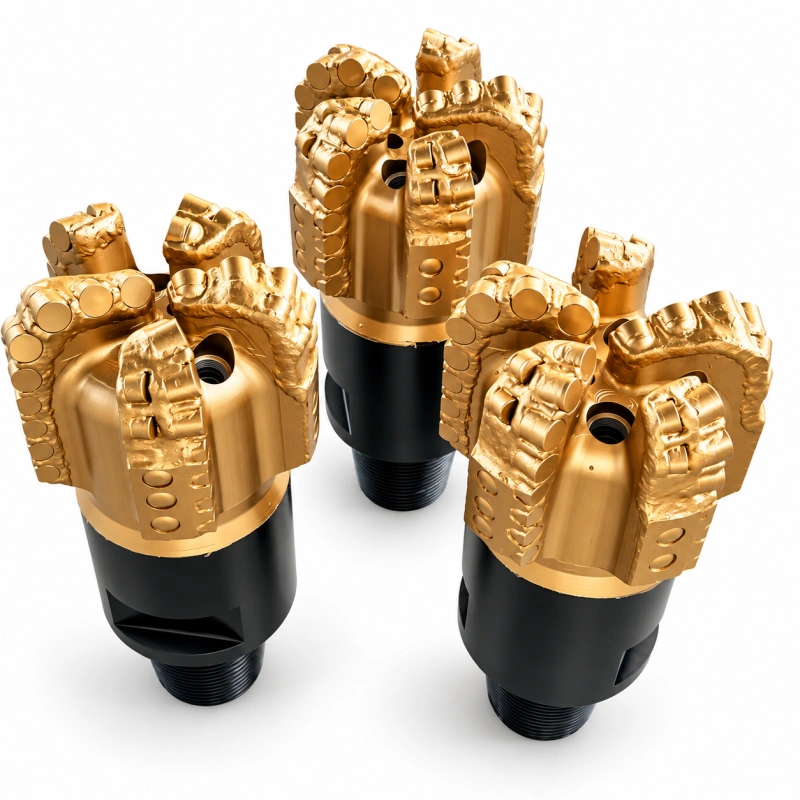
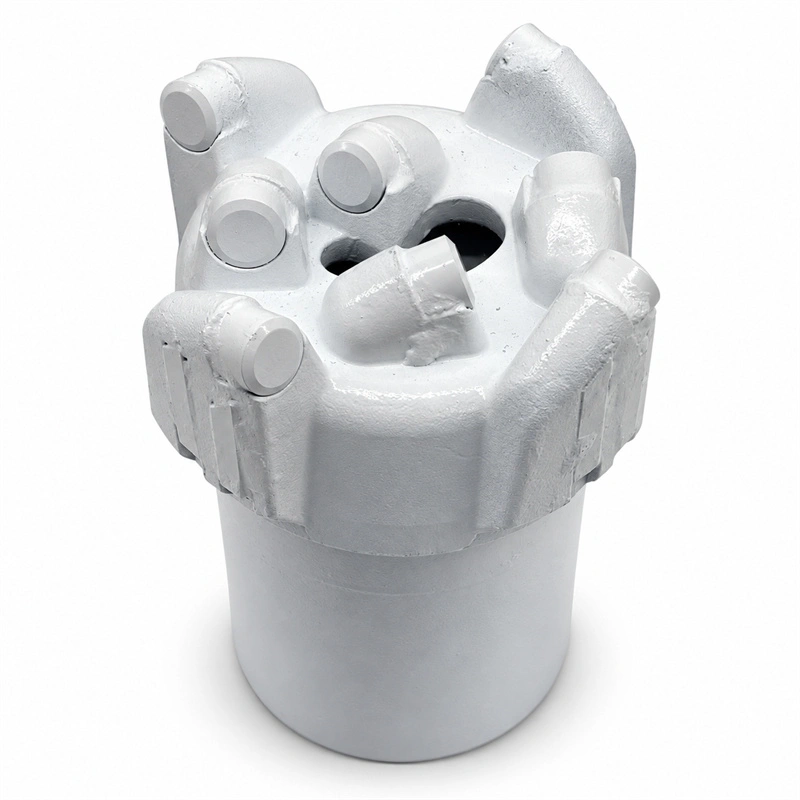 Before Drilling
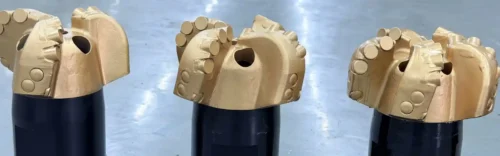
New 91 mm flat-top PDC bit — 7 × 1308 super petroleum-grade PDC cutters, before field use.
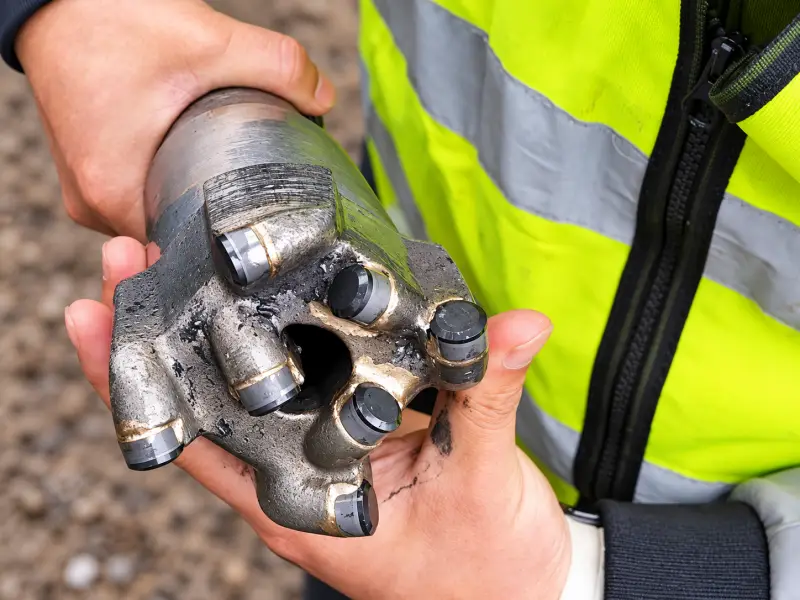 After 100 m
The same 91 mm flat-top PDC bit after about 100 m of rotary drilling — pulled and inspected on site.
Project Overview
| Item | Detail |
|---|---|
| Drill bit type | Flat-top PDC drill bit |
| Bit diameter | 91 mm |
| Drilling depth | About 100 m |
| PDC cutter spec | 1308 (super petroleum-grade PDC) |
| Cutting structure | 7 × 1308 PDC cutters |
| Drilling method | Rotary non-coring drilling |
| Typical uses | Grouting holes, gas drainage, water wells, geothermal |
| Suitable rock | Selected limestone, dolomite, sandstone, coal-bearing, soft-to-medium formations |
| Inspection point | Bit pulled after about 100 m of drilling |
Exact drilling settings depend on the rock, rig, connection, flushing and operator. Because of this, RPM and weight on bit should always be adjusted to real field response.
What Is a Flat-Top PDC Drill Bit?
A flat-top PDC drill bit is a fixed-cutter, non-coring tool. Unlike a core bit, which cuts an annular path and leaves a central rock core, a flat-top PDC bit removes rock across the full bottom of the hole.
Because of this fairly simple cutting profile, this type of bit works well in many engineering jobs where the main goal is:
Fast hole advance, rather than core recovery.
The 91 mm version used in this case had 1308 PDC cutters set across the cutting face. These cutters use super petroleum-grade PDC, giving strong wear resistance and reliable cutting in soft-to-medium formations. As the drill string turns, the cutters shear the rock and keep removing material from the bottom of the hole.
Why a 91 mm PDC Bit Was Selected
A 91 mm diameter is common in a range of smaller engineering and exploration-related jobs. For this project, the chosen bit size gave a practical balance between:
- Borehole diameter
- Rig torque needs
- Cuttings removal
- Cutter load
- Drilling efficiency
In addition, the compact diameter keeps the cutting structure fairly simple while still giving enough strength around the body and gauge.
Why 1308 PDC Cutters Were Used
The bit in this case uses 1308 PDC cutting elements. This cutter spec is often used in smaller and medium-diameter PDC bits where a balance is needed between:
- Cutting aggressiveness
- Wear resistance
- Cutter support
- Compact cutting structure
For a 91 mm flat-top bit, the 7-cutter layout lets the cutters cover the full bottom of the hole while keeping enough space for cuttings to move away from the cutting face.
Even so, the key point is not only the cutter count. Their position and load spread decide how evenly the bit wears during drilling.
The 100 m Drilling Interval
During the roughly 100 m interval, the bit stayed in steady rotary cutting service. As the PDC cutters met the rock, they removed material mainly by shearing.
For PDC drilling, steady conditions matter a lot. Heavy vibration or impact can damage the diamond edges even when the rock itself is not very hard. Because of this, the operator needs to watch:
- Penetration rate
- Torque
- Drilling vibration
- Cuttings return
- Flushing condition
- Rock changes
If penetration suddenly drops, simply pushing more pressure is not always the right fix. The cause may instead be:
- Harder rock
- Poor hole cleaning
- Bit balling
- Cutter wear
- Rock transition
- Heavy vibration
What We Look for After Pulling the Bit
After about 100 m, the bit was pulled for checks. This step matters a lot, because a used bit holds data about what happened underground. Several areas should be looked at with care.
1. PDC Cutter Retention
The first question is whether all PDC cutters stay firmly in place. Cutter loss can quickly damage the rest of the cutting structure. Good retention means the pockets and brazed joints held steady during drilling.
2. Cutter Wear
The cutting edges should be checked for:
- Normal wear flats
- Chipping
- Cracking
- Odd rounding
- Local heat marks
Fairly even wear across the structure usually points to balanced load. If one cutter is heavily worn while its neighbors stay nearly intact, the load may have been uneven.
3. Cutter Chipping
PDC cutters resist wear very well, but they can still be damaged by impact. Chipping may come from:
- Fractured rock
- Hard inclusions
- Heavy vibration
- Sudden weight-on-bit changes
- Downhole debris
Because of this, cutter condition after 100 m is a key sign of whether the settings and bit design matched the job.
4. Blade and Body Wear
The bit body should also be checked. Even if the cutters stay usable, heavy wear on the support structure can still shorten bit life. Key areas include:
- Blade surfaces
- Shoulder
- Waterways
- Gauge
- Areas exposed to cuttings flow
Steel-body wear matters most in abrasive rock.
5. Gauge Condition
The outer diameter of the bit must keep the required hole size. Gauge wear can make the bit undersize, which may affect:
- Hole quality
- Later drilling tools
- Rod movement
- Reaming needs
For a 91 mm bit, keeping the gauge matters most if more drilling or casing work will follow.
What the Used Bit Can Tell Us
A used drill bit is not waste. It is field data. By studying the condition after 100 m, engineers can decide whether the next bit should keep the same structure or be changed.
| Used-Bit Sign | Possible Meaning |
|---|---|
| Even cutter wear | Fairly steady cutter load |
| Broken PDC cutters | Impact, vibration or wrong rock match |
| Heavy gauge wear | Abrasive wall contact |
| Heavy body erosion | Abrasive cuttings or fast fluid flow |
| Material packed on face | Weak cleaning or sticky rock |
This kind of check helps improve the next bit choice.
Flat-Top PDC Bits in Limestone and Dolomite
Flat-top PDC bits can work well in selected limestone and dolomite when the rock is fairly uniform and suits shearing. However, limestone and dolomite should never be treated as the same rock. Their behavior can change with:
- Compressive strength
- Silica content
- Abrasiveness
- Fractures
- Bedding
- Rock density
Fairly clean, solid rock may allow steady PDC drilling. A highly fractured or abrasive formation may need a stronger cutting structure or a different bit type.
Flat-Top PDC Bits in Sandstone
Sandstone deserves special attention, because its abrasiveness varies a lot. Some sandstone drills fairly easily. Quartz-rich sandstone can be very abrasive and may quickly wear:
- PDC cutting edges
- Gauge protection
- Steel body
- Shoulder areas
Because of this, the right PDC cutter grade and wear protection matter more and more in abrasive sandstone.
Applications of 91 mm Flat-Top PDC Bits
This type of bit can be used in many engineering drilling jobs. Common examples include:
Grouting Holes
Used in foundation work, slope support and underground engineering.
Gas Drainage Holes
Common in coal-mine work, where rotary PDC drilling gives fast penetration in suitable coal-bearing rock.
Water-Well Drilling
Useful for smaller pilot or drilling sections in the right sedimentary rock.
Geothermal Drilling
Can be used in suitable intervals where PDC shearing gives fast penetration.
Engineering Drilling
Suitable for many construction and geological jobs where full-face drilling is needed.
Why a Used-Bit Photo Builds Customer Confidence
For global customers, a new bit shows production quality. A used bit shows field performance. That gap matters.
A field photo taken after 100 m of real drilling lets customers see:
- How the cutters wear
- Whether cutters stay in place
- How the body holds up
- Whether gauge protection stays effective
- How the structure behaves after real use
This is far more useful than simply saying “our PDC bits are high quality.” In short, real field proof beats a marketing slogan.
How to Improve the Next Bit
If a customer’s current flat-top PDC bit is not working as expected, the used bit should be checked before making the replacement. Useful data includes:
- Clear front-view photo
- Side-view photo
- Close-up photos of damaged cutters
- Total meters drilled
- Main rock types
- Drill rig model
- Approximate RPM
- Flushing method
- Connection
From this data, it may be possible to adjust:
- PDC cutter grade
- Cutter quantity
- Cutter position
- Cutter exposure
- Gauge protection
- Waterway structure
- Body reinforcement
In short, the goal is not just to replace the worn bit. The goal is to understand why it wore the way it did.
Available Flat-Top PDC Bit Sizes
Chenghui flat-top PDC drill bits can be supplied in several diameters:
| Bit Diameter | Typical PDC Cutter Setup |
|---|---|
| 65 mm | 5 × 1308 |
| 75 mm | 6 × 1308 |
| 91 mm | 7 × 1308 |
| 113 mm | 10 × 1308 |
| 133 mm | 13 × 1308 + aux cutters (design-dependent) |
| 153 mm | Multi-cutter setup to formation |
Connections can be customized to the drilling system and customer needs. Actual cutter count and structure may also be adjusted to the rock and job.
Planning a Similar 100 m Drilling Project?
If you are choosing a 91 mm PDC drill bit, please provide the following before ordering:
- Required diameter
- Target drilling depth
- Rock type
- Drill rig model
- Required thread connection
- Flushing method
- Current drill-bit performance
If you already have a worn bit, send us photos. A worn bit can often give useful data about the rock and drilling conditions.
Real Drilling Conditions. Real Bit Performance.
Chenghui — PDC bits matched to the formation, tested in the borehole.
Super petroleum-grade PDC cutters. Proven wear. Photos from the field, not just the factory.
Frequently Asked Questions
What is a flat-top PDC drill bit used for?
A flat-top PDC bit is a fixed-cutter, non-coring tool. It removes rock across the full bottom of the hole. It suits jobs where fast hole advance matters more than core recovery, such as grouting holes, gas drainage, water wells, geothermal and engineering drilling.
Why was a 91 mm flat-top PDC bit chosen for this project?
The 91 mm size gives a practical balance between hole diameter, rig torque, cuttings removal, cutter load and drilling efficiency. Its compact size keeps the cutting structure fairly simple while still giving enough body and gauge strength.
What does 1308 mean for a PDC cutter?
1308 is a common PDC cutter spec used in small and medium-diameter bits. It gives a useful balance between cutting aggressiveness, wear resistance, cutter support and compact structure. In this 91 mm bit, 7 × 1308 cutters were used.
Why does the used-bit photo matter more than a new-bit photo?
A new bit shows production quality. A used bit shows field performance. A photo after 100 m of real drilling lets customers see how the cutters wear, whether cutters stay in place, how the body holds up and whether gauge protection stays effective.
What information should I send for a flat-top PDC bit quote?
Send diameter, target depth, rock type, rig model, thread connection, flushing method and current bit performance. Photos of worn bits also help a lot, because they show the actual load, wear pattern and formation behavior.
Need a flat-top PDC bit for grouting, water wells, gas drainage or geothermal work? Send us your diameter, depth and rock type. Our team will recommend a suitable setup.
Share your rig model, thread connection and flushing method. Photos of worn bits are also very useful for accurate selection.







 English
 Chinese
 Portuguese
 French
 Spanish
 Russian
 Turkish
 Vietnamese