

Five Factors That Affect Drill Bit Service Life
How formation, rotary speed, weight on bit, cleaning and vibration shape bit wear
Drill bit life is not determined by manufacturing quality alone. In fact, even a well-made bit can fail early when it is used in the wrong formation or with incorrect drilling settings.
Because of this, understanding the main causes of wear can greatly reduce drilling cost.
Quick summary: Five factors shape bit life — formation, rotary speed, weight on bit, cleaning and cooling, and vibration. When abnormal wear repeats, the whole drilling system should be reviewed, not just the bit.
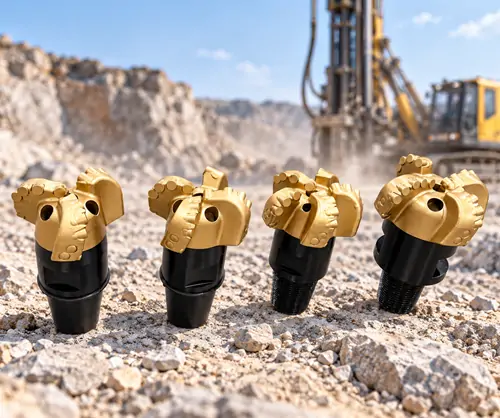
1. Formation
Rock characteristics have a major influence on bit life. For example, two formations with similar hardness can still produce very different wear.
Important factors include:
- Compressive strength
- Abrasiveness
- Fractures
- Quartz content
- Formation uniformity
- Loose or broken zones
As a result, abrasive formations can quickly wear gauge surfaces even when the rock is not extremely hard.
2. Rotary Speed
Too much rotary speed can raise cutter temperature, vibration and wear. On the other hand, too little speed may lower drilling efficiency.
The correct rotary speed depends on the bit type, diameter, formation and available rig power.
In short, operators should not assume that higher RPM always means faster drilling.
3. Weight on Bit
The bit needs enough load to engage the formation. However, too much weight can overload cutting elements and drilling parts.
For PDC bits, heavy loading combined with vibration may lead to cutter damage. Meanwhile, for other bit types, improper loading can also speed up tooth or structural wear.
4. Cleaning and Cooling
Cuttings must be removed from the bottom of the borehole. When cuttings stay under the bit, the tool may repeatedly grind already-cut material instead of cutting fresh rock.
Poor cleaning can lead to:
- Lower penetration rate
- Higher temperature
- Increased wear
- Bit balling in certain formations
Therefore, waterways and flushing passages should stay unobstructed.
Tip: In many projects, poor cleaning — not cutter wear — is the real limit on penetration rate. In other words, check the hydraulics before blaming the bit.
5. Drilling Vibration
Vibration is one of the most damaging conditions for many drilling tools. Possible causes include:
- Uneven formation
- Incorrect drilling parameters
- Poor bit balance
- Bent drilling components
- Excessive rotary speed
- Unstable rig setup
Because of this, reducing severe vibration can improve both bit life and borehole quality.
Inspect Used Bits: Wear Patterns Tell a Story
Used drill bits provide valuable information. Instead of throwing away a worn tool right away, examine:
- Which cutters wore first
- Whether wear is symmetrical
- Gauge condition
- Blade damage
- Tooth breakage
- Impact marks
In most cases, a consistent wear pattern tells a story about the formation and the operating conditions.
| Wear Sign | Possible Cause |
|---|---|
| Gauge wear | Abrasive formation, weak gauge protection |
| Cutter breakage | Vibration, impact, too much weight on bit |
| Uneven blade wear | Poor bit balance, bent components |
| Bit balling | Poor cleaning, soft sticky formation |
| Tooth or insert loss | Hard or broken formation, wrong IADC type |
Frequently Asked Questions
What is the main cause of short drill bit life?
There is no single cause. However, formation abrasiveness, too much rotary speed, too much weight on bit, poor cleaning and strong vibration are the most common reasons.
Does higher RPM always mean faster drilling?
No. Higher RPM can raise cutter temperature and vibration, which may shorten bit life. The right speed depends on the bit type, formation and rig power.
Why does poor cleaning shorten bit life?
When cuttings stay under the bit, the tool grinds already-cut material instead of fresh rock. This lowers penetration rate, raises temperature and speeds up wear.
How can I tell why a bit wore out?
Look at the wear pattern. Gauge wear, cutter breakage, uneven blade wear, bit balling and tooth loss each point to different causes. Photos of worn bits are very useful for suppliers.
Conclusion: Bit Life Comes from the Whole System
Longer bit life comes from combining the right bit design with correct drilling operation. Formation, RPM, weight on bit, flushing and vibration should all be considered together.
In short, when abnormal wear happens again and again, changing only the bit may not solve the problem. Because of this, the entire drilling system should be reviewed.
Getting shorter bit life than expected? Send us your formation details, drilling parameters and photos of used bits. Our team will help you find the cause.
Share your formation description, drilling method, bit diameter and connection requirements. We will review your project and recommend a suitable bit design and operating approach.






 English
 Chinese
 Portuguese
 French
 Spanish
 Russian
 Turkish
 Vietnamese