

PDC Drill Bits: How the Cutting Structure Works
Understanding cutter layout, blade design, gauge protection and hydraulic cleaning
PDC drill bits have become an important cutting tool in water well drilling, mining, geological drilling and many other drilling applications.
PDC stands for Polycrystalline Diamond Compact. The cutting elements are designed to shear the formation as the bit rotates.
Understanding how this cutting mechanism works helps drilling contractors choose a more suitable bit.
Quick summary: PDC bits remove rock by shearing rather than crushing. Cutter quality, cutter layout, blade geometry, gauge protection and hydraulics together determine penetration rate, wear life and overall drilling cost.
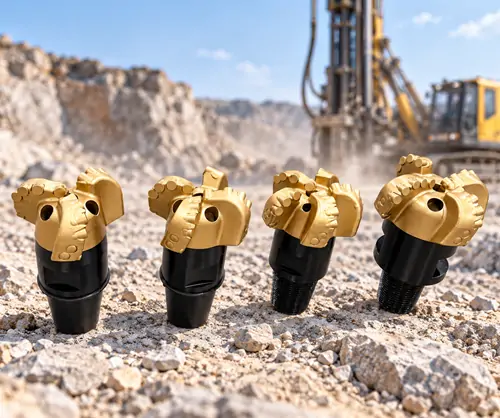
How a PDC Cutter Removes Rock
Unlike roller cone bits that primarily crush and fracture the formation, a PDC cutter removes rock through a shearing action.
As the drill bit rotates, the exposed diamond surface contacts the formation and cuts material away.
Under suitable conditions, this continuous cutting action can produce a high rate of penetration.
Main Components of a PDC Bit
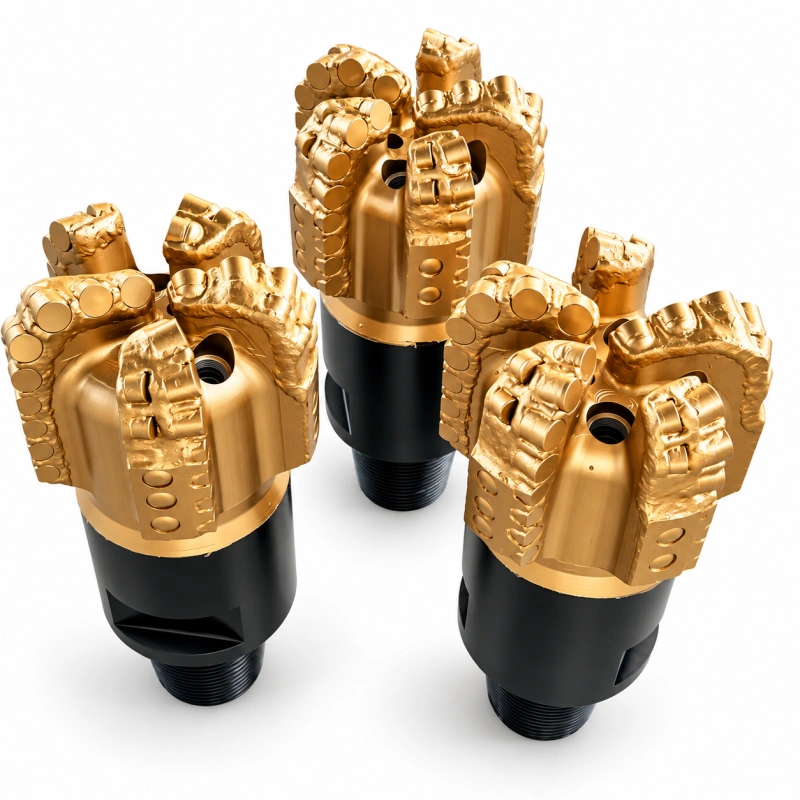
Although designs vary considerably, a typical PDC bit may include:
- Bit body
- PDC cutters
- Cutting blades
- Gauge section
- Fluid channels
- Nozzles or flushing passages
- Thread connection
Each part influences drilling performance.
Cutter Layout: Why Placement Matters
The number, size and position of PDC cutters should not be selected randomly.
Cutter arrangement affects:
- Cutting load distribution
- Bit balance
- Penetration behavior
- Wear pattern
- Stability
- Cleaning efficiency
For some drilling applications, additional cutters may be placed in high-wear areas to improve durability.
Blade Design: Balancing Cutting Efficiency and Bit Strength
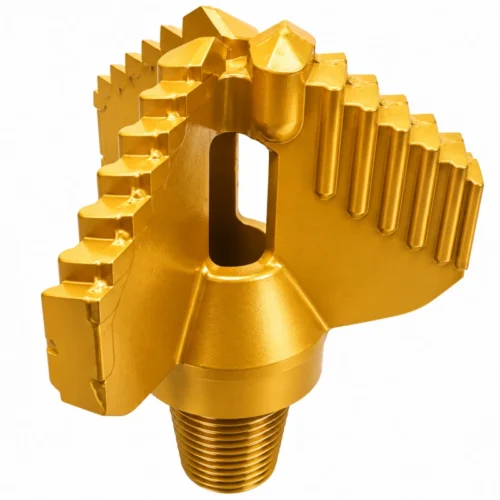
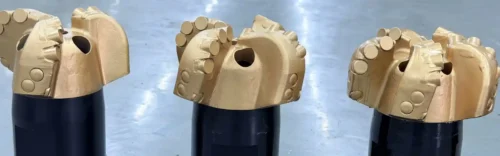
PDC bits may be manufactured with different numbers and shapes of blades.
Common drilling-tool designs include three-wing, four-wing, five-wing and other configurations.
Blade geometry influences both cutting efficiency and bit strength.
A design with large open waterways may provide effective cuttings removal in softer formations, while more reinforced structures can be considered for demanding formations.
Gauge Protection: Keeping the Hole to Size
Maintaining hole diameter is important during drilling.
If the outer diameter of the bit wears quickly, the borehole can become undersized and subsequent drilling operations may become more difficult.
Gauge protection can therefore be an important part of a PDC bit design, particularly in abrasive formations.
Cleaning and Cooling: Hydraulics That Support the Cutters
Cuttings need to be removed from the bit face continuously.
If cuttings accumulate around the cutters, the bit may lose drilling efficiency and experience increased temperature.
Waterways, fluid passages and nozzle configuration should therefore match the drilling method and available circulation system.
Tip: When drilling conditions change, review the hydraulic design together with the cutter layout. In many projects, poor cleaning — not cutter wear — is the real limit on penetration rate.
Where PDC Bits Are Commonly Used
Depending on design, PDC bits may be suitable for drilling:
- Sandstone
- Mudstone
- Shale
- Coal
- Limestone
- Weathered rock
- Mixed soft to medium-hard formations
However, formation descriptions such as “medium-hard” are only general references.
Actual performance depends on rock strength, abrasiveness, fractures and drilling parameters.
Choosing a PDC Bit: Information to Confirm Before Ordering
Before ordering, buyers should confirm:
| Information | Why It Matters |
|---|---|
| Diameter | Determines hole size and connection options |
| Thread connection | Ensures compatibility with the drill string |
| Formation | Guides cutter type, blade design and gauge protection |
| Drilling depth | Affects bit life expectations and wear resistance |
| Rig type | Helps match torque, rotation speed and flushing |
| Required blade structure | Balances cutting efficiency and bit strength |
| Flushing method | Supports cleaning, cooling and cuttings removal |
For unusual conditions, a manufacturer may adjust cutter quantity, blade geometry, gauge protection or body structure.
Frequently Asked Questions
What does PDC stand for in a PDC drill bit?
PDC stands for Polycrystalline Diamond Compact. These cutters use a diamond layer bonded to a carbide substrate, giving high wear resistance and efficient shearing action.
How is a PDC bit different from a roller cone bit?
A roller cone bit mainly crushes and fractures rock with rotating cones, while a PDC bit removes rock by shearing. PDC bits often achieve higher penetration rates in soft to medium-hard formations.
Can a PDC bit be used in hard rock?
Standard PDC bits are usually most effective in soft to medium-hard formations. For harder or highly abrasive rock, specially designed PDC bits with stronger gauge protection or tricone bits may be more suitable.
Why is gauge protection important on a PDC bit?
Gauge protection helps maintain hole diameter. If the outer diameter wears too quickly, the borehole may become undersized and later drilling operations can become more difficult.
What information should I provide when ordering a PDC bit?
Provide the diameter, thread connection, formation description, drilling depth, rig type, required blade structure and flushing method. For unusual conditions, customization of cutter layout or body structure may be possible.
Conclusion: Performance Comes from the Whole Design
PDC drill-bit performance comes from the interaction between cutter quality, cutter placement, blade geometry, hydraulics and drilling parameters.
Choosing only by diameter and price can overlook many of the factors that determine actual drilling cost.
Understanding these fundamentals makes it easier to select a PDC bit suitable for the formation and drilling equipment.
Need help choosing a PDC drill bit for your formation? Send us your drilling conditions and our team will recommend a suitable cutter layout, blade design and gauge protection.
Share your formation details, drilling method, bit diameter and connection requirements. We will review your project and respond with a practical recommendation.







 English
 Chinese
 Portuguese
 French
 Spanish
 Russian
 Turkish
 Vietnamese