

400 m Geothermal Well Drilling Project Using a 4-Blade Arc PDC Drill Bit
Field application of a 1613 PDC cutter bit in mixed sedimentary formations
Geothermal well drilling places very different demands on a drill bit compared with ordinary shallow construction drilling. As depth grows, the bit must not only keep acceptable penetration but also handle longer flow paths, changing formations, longer trip time and bigger consequences from early bit wear.
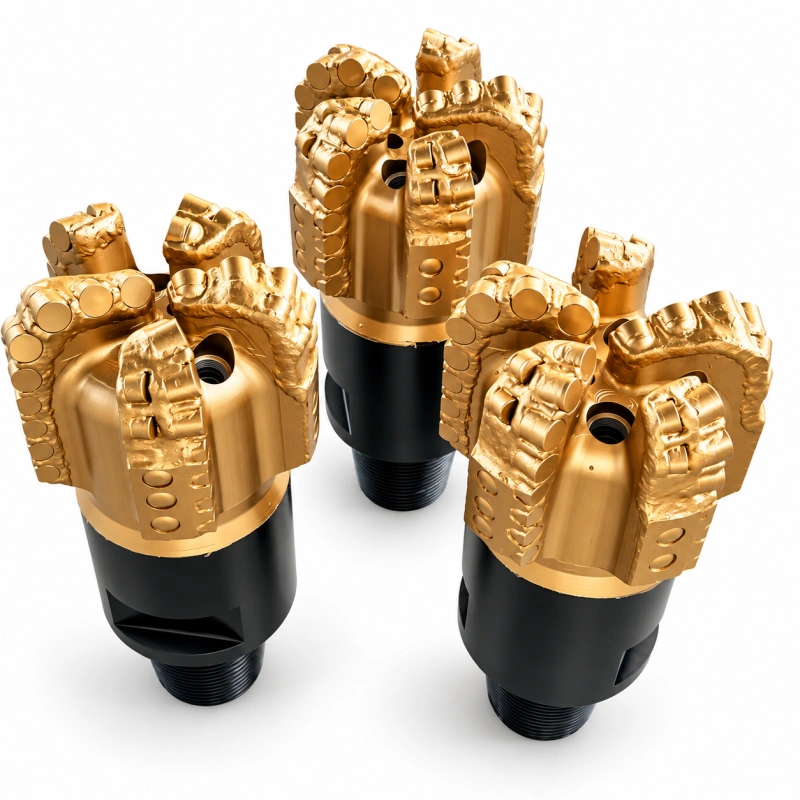
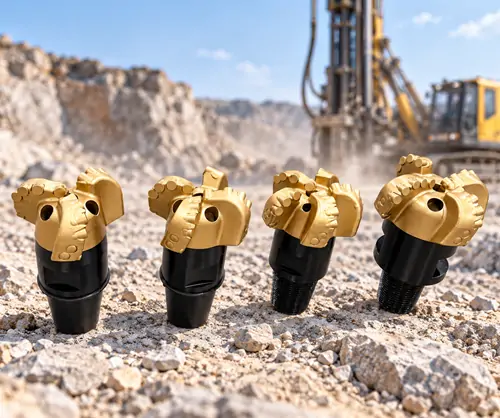
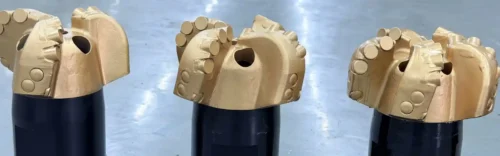
In this representative 400-meter geothermal project, a 4-blade arc PDC drill bit with 1613 PDC cutters was used for drilling through mostly sedimentary formations. The goal was to keep steady drilling performance while cutting needless bit changes and controlling total drilling cost.
Quick summary: A 152 mm four-blade arc PDC bit with 1613 cutters was used to drill 400 m of sandstone, mudstone, shale and limestone. Steady drilling, open waterways and controlled feed mattered as much as the bit itself. In short, the formation guided the design.
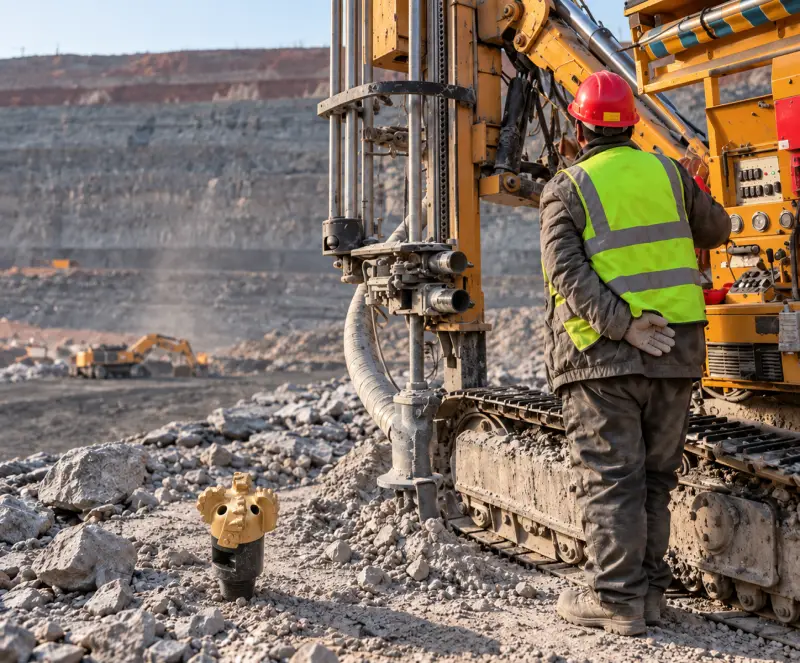
Project Overview
| Item | Detail |
|---|---|
| Project | Geothermal well drilling |
| Final depth | 400 m |
| Drilling method | Rotary drilling |
| Drill bit type | 4-blade arc PDC drill bit |
| PDC cutter | 1613 |
| Representative diameter | 152 mm |
| Connection | API REG, matched to the drill string |
| Formation | Sandstone, mudstone, shale, limestone, locally broken zones |
| Circulation | Water-based drilling fluid |
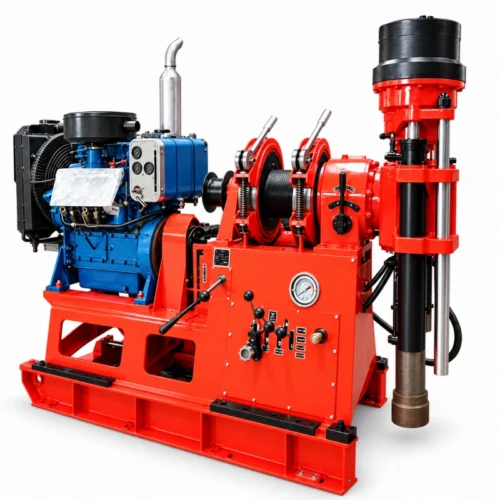
| Rig type | Hydraulic rotary drilling rig |
| Primary goal | Geothermal exploration / well construction |
The drilling settings described in this case are working ranges, not fixed rules. Real settings must be adjusted by rock strength, abrasiveness, rig capacity, borehole condition and the exact bit structure.
Why a 4-Blade Arc PDC Bit Was Selected
The expected rock was mainly soft to medium-strength sedimentary material with local limestone and broken zones. For this kind of rock, PDC cutting can give fast rock removal, because the cutters work mainly by shearing.
Modern PDC technology has moved further into geothermal drilling. However, geothermal rock remains tougher, since it can be harder, more fractured and more abrasive than many normal sedimentary settings. Because of this, industry studies have paid fresh attention to PDC technology for its possible gains in drilling rate and bit life.
For this project, the 4-blade structure gave a balance between:
- Cutting efficiency
- Cutter spread
- Bit stability
- Fluid flow
- Cuttings removal
- Structural strength
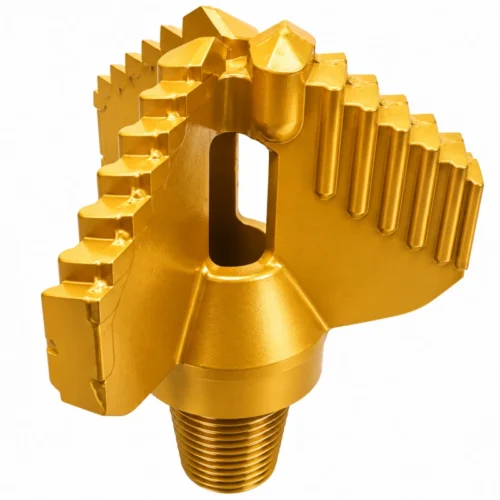
In addition, the curved blade shape lets the PDC cutters meet the rock bit by bit, rather than putting the whole cutting load in one spot.
Why 1613 PDC Cutters Were Used
The cutting structure used 1613 PDC cutters. In common industry terms, 1613 usually means a cutter with an about 16 mm cutting element, with the exact shape depending on the maker and grade.
A 16 mm-class cutter gives a useful balance between:
- Cutting area
- Mechanical strength
- Cutter exposure
- Wear resistance
- Cutting aggressiveness
Because of this, modern PDC makers still use 16 mm cutting elements in tough designs, including high-abrasion and high-impact jobs. For the 4-blade geothermal bit, cutter position matters just as much as cutter size.
Cutters must be placed so the center, nose, shoulder and gauge areas share the drilling load as evenly as possible.
Representative Geological Profile
A geothermal hole rarely passes through one uniform rock. For this 400 m project, the representative geology was divided into four intervals.
0–80 m: Weathered Soil, Mudstone and Shale
The upper section held weathered material and softer sedimentary rock. This part allowed fairly fast drilling, but it made fine cuttings. Good flushing was important to stop material building up between the blades. If sticky material stays around the cutting structure, the bit can face bit balling, which slows penetration even when the cutters are still sharp.
80–180 m: Sandstone and Mudstone
The rock became steadily more solid. Sandstone raised the abrasive load on the PDC cutters and gauge area. Because of this, drilling settings were changed step by step, rather than simply pushing more weight on bit. This section needed a balance between penetration and cutter care.
180–300 m: Limestone, Sandstone and Mixed Sedimentary Rock
The middle section held stronger limestone intervals mixed with sandstone and mudstone. This made cutter loads change as the bit moved between rock types. As a result, steady drilling became more important. The operator watched:
- Torque
- Penetration rate
- Pump pressure
- Vibration
- Cuttings return
Sudden changes in these values can point to a rock change or poor hole-cleaning conditions.
300–400 m: Limestone With Local Fractured Zones
The final part was mainly solid limestone with some fractured and mixed zones. At this depth, bit changes cost more, because every trip means pulling and rerunning hundreds of meters of drill string. Because of this, the drilling plan focused on steady cutter load rather than the highest possible instant penetration.
Typical Drilling Parameters
For a 152 mm-class four-blade PDC bit in suitable sedimentary rock, a working range may include:
- Rotary speed: about 120–250 RPM
- Weight on bit: moderate, adjusted step by step
- Circulation: steady water-based drilling fluid
- Feed: controlled hydraulic feed
- Mode: steady rotary drilling with ongoing cuttings checks
These values should not be treated as fixed rules. The right settings depend on rock hardness, bit diameter, cutter exposure, rig torque, drill-string layout, borehole condition and the fluid system.
Key rule: do not make up for poor cutting by adding more weight on bit. If penetration suddenly drops, the cause may instead be a rock change, bit balling, poor cuttings flow, cutter wear, heavy vibration or weak flushing.
The Importance of Drilling Fluid in a 400 m Geothermal Well
Drilling-fluid care becomes more important as the hole gets deeper. Based on widely accepted geothermal drilling guidance, drilling fluids do several key jobs:
- Cooling the drill bit
- Cleaning the cutting structure
- Carrying cuttings to the surface
- Lubricating the drill string
- Keeping the borehole stable
- Helping control formation fluids
Fresh-water-based fluids are often used in geothermal work. For this project, steady flow around the four PDC blades mattered a lot. If cuttings stay trapped between the blade structure and the hole bottom, the bit begins recutting already-broken material. As a result, energy use rises and penetration drops.
Why Waterways Matter on a Four-Blade PDC Bit
A good PDC bit does not only need sharp cutters. It also needs enough room for broken rock to leave.
The four-blade arc design used open fluid channels between the blades. These waterways help:
- Cool the cutters
- Clean the bit face
- Move cuttings
- Reduce recutting
- Reduce bit balling
This is very important in mixed sandstone and mudstone sections, where fine material can build up around the cutting structure.
Drilling Through Sandstone
Sandstone can be tricky. Some sandstone is fairly easy to drill. Other sandstone holds a lot of quartz and wears the bit quickly. Because of this, the operator paid close attention to cutter and gauge wear after long sandstone runs.
In abrasive rock, the best bit is not always the one that drills fastest in the first hour. A better measure is: meters drilled before the bit must be changed.
Drilling Through Limestone
Limestone often suits well-designed PDC cutting structures when the rock is solid enough. However, limestone traits vary a lot. Hardness, silica content, fracture state and bedding can all affect drilling performance.
During the limestone runs, steady cutter contact was the main goal. Heavy cutter load can lead to:
- Chipping
- Impact damage
- Torque swings
- Shorter bit life
Modern geothermal PDC studies also stress cutter shape and drilling dynamics, because stability has a direct effect on cutter life in harder rock.
Handling Fractured Formations
Fractured rock is one of the biggest challenges for fixed-cutter bits. When the cutter moves between solid rock and voids or broken pieces, impact load rises. This can cause:
- Cutter chipping
- Blade vibration
- Torque swings
- Uneven penetration
Because of this, the final 300–400 m section was drilled more carefully where fractured zones appeared. Instead of pushing feed force, the operator kept steady rotation and watched the drilling response.
Gauge Protection
The gauge section keeps the borehole at the right size. At 400 m depth, early gauge wear can cause real problems. If the bit goes under-gauge, it may affect:
- Borehole diameter
- Later drilling tools
- Casing installation
- Drill-string movement
Because of this, the four-blade PDC bit used reinforced gauge protection around the outside diameter.
Why Bit Life Matters More at 400 m
At shallow depth, changing a drill bit may not take long. At 400 m, the picture changes. An early bit change means:
- Stop drilling
- Pull hundreds of meters of drill string
- Replace the bit
- Run the whole string back in
- Re-establish circulation
- Return to bottom
This non-drilling time can become a large part of the total project cost. Industry geothermal studies often point to slow drilling rates and drilling trips as major cost issues. Because of this, PDC technology is attractive partly because longer bit life can cut needless trips.
PDC vs Tricone for Geothermal Drilling
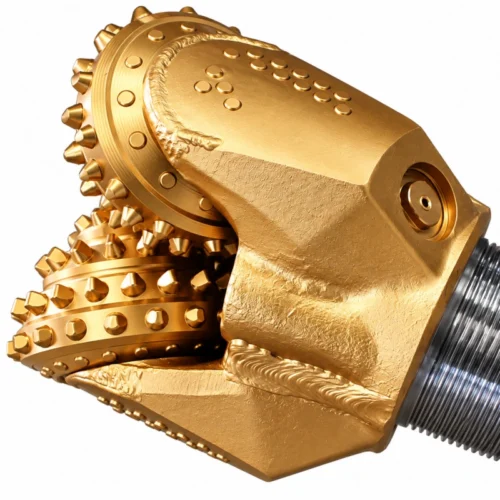
Tricone bits remain very important in geothermal drilling. They can give strong results where crushing action and impact tolerance are needed. However, roller-cone bits hold moving cones, bearings and seals.
PDC bits have no rotating bearing parts. This can help in some geothermal settings, especially where heat and long drilling intervals put pressure on roller-cone bearing life. In fact, geothermal drilling guidance often notes that this lack of moving bearing parts is one of the possible gains of PDC drag bits.
Even so, PDC is not always the best pick for every geothermal rock. Very hard, abrasive and badly fractured rock may still favor:
- TCI tricone bits
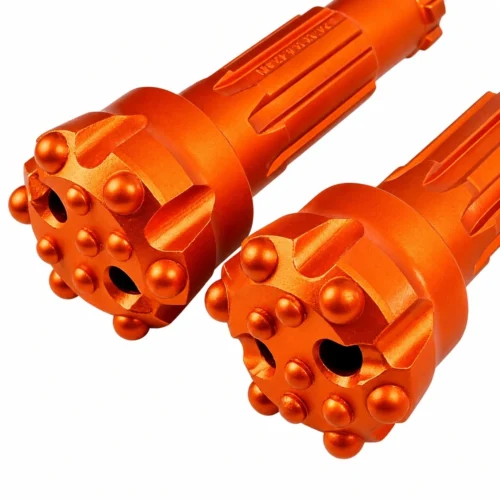
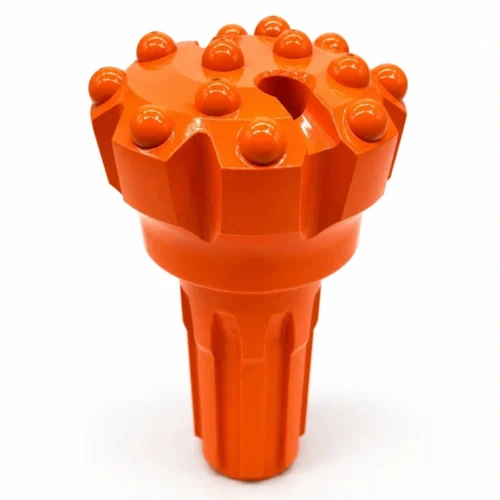
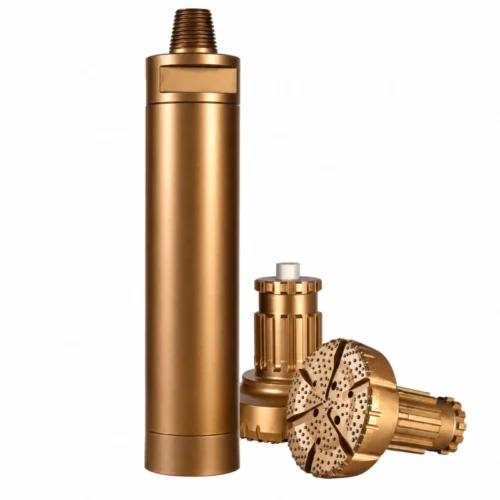
- DTH systems
- Other special hard-rock drilling tools
In short, the formation should decide the tool.
PDC Performance in Modern Geothermal Projects
The use of PDC technology in geothermal drilling keeps growing. Published field cases show that fixed-cutter technology can work well even in tough rock when cutter design, bit shape and drilling dynamics are optimized.
For example, a geothermal field case in Indonesia reported a PDC-based conical diamond element bit drilling about 600 m in a single run, while improving rate of penetration compared with a nearby TCI program. Another case in the Philippines reported good drilling through hard volcanic rock while reducing the number of bit runs compared with a nearby TCI program.
These results do not mean every PDC bit can reach the same performance. Instead, they show how much matching cutter technology and bit design to the rock really matters.
Note: Published field cases are useful for reference, but each project still needs its own bit selection. In other words, compare your rock, rig and drilling plan before choosing a design.
Bit Inspection After the 400 m Section
After the planned interval, the bit should be checked with care. Important areas include:
| Wear Sign | Possible Meaning |
|---|---|
| PDC cutter wear | Fairly even wear shows balanced cutter load |
| Cutter chipping | Impact, vibration or fractured rock |
| Shoulder wear | Abrasive rock or heavy load in one area |
| Gauge wear | Rock abrasiveness and wall contact |
| Blade erosion | Fluid and cuttings wearing bare steel |
| Waterway condition | Shows if the flushing system worked well |
What Made the Four-Blade Arc PDC Bit Suitable?
The result came from the mix of several factors:
- 4-blade structure
- 1613 PDC cutters
- Arc blade profile
- Open waterways
- Gauge protection
- Controlled drilling settings
- Steady fluid flow
None of these items should be judged on its own. For example, a high-quality PDC cutter placed on a poorly designed bit may still perform badly. In the same way, a well-designed bit run under the wrong settings may suffer early damage.
Lessons From the 400 m Geothermal Drilling Project
Several practical lessons come out of this project.
1. Formation Matching Comes First
The bit should be chosen by real geology, not by diameter alone.
2. 1613 Cutter Size Is Only One Part of the Design
Cutter grade, angle, exposure and layout matter just as much.
3. Steady Drilling Can Protect PDC Cutters
Maximum weight on bit does not always give the lowest drilling cost.
4. Cuttings Must Leave the Borehole
Good fluid flow directly affects penetration and cutter temperature.
5. Bit Life Is Worth More as Depth Grows
At 400 m, avoiding one needless trip can save a large amount of drilling time.
6. Used Bits Should Be Studied
A used bit gives valuable data for the next tool design.
Customized Four-Blade Arc PDC Drill Bits
We can make four-blade arc PDC drill bits for different drilling needs. Available diameters can include:
Other sizes can also be reviewed to project needs. Based on bit diameter and rock, cutting structures can be set up with different PDC cutter mixes, including 1613-series cutting elements.
Connection options can also be customized to match the customer’s rig and drill string. Typical uses include:
- Geothermal drilling
- Water-well drilling
- Anchor drilling
- Slope reinforcement
- Grouting holes
- Foundation drilling
- Mining
- Engineering drilling
Suitable rock can include selected sandstone, mudstone, shale, limestone, backfill, weathered rock and soft to medium formations. For harder, highly abrasive or badly fractured rock, the bit setup should be reviewed case by case.
Planning a Geothermal Well?
If you are preparing a geothermal drilling project, send us:
- Required bit diameter
- Target drilling depth
- Formation info
- Drill rig model
- Rotary speed and torque, if known
- Required connection
- Flushing method
- Photos of existing or worn drill bits
In short, the more we know before production, the more closely the cutting structure can be matched to the project.
Built Around the Formation. Proven in the Borehole.
Chenghui — PDC drilling tools for real geothermal conditions.
From shallow water wells to deep geothermal projects, our bits are matched to the rock, the rig and the real drilling plan.
Frequently Asked Questions
Why was a 4-blade arc PDC bit chosen for this geothermal project?
Because the expected rock was mostly soft to medium-strength sedimentary formations with local limestone and broken zones. In this kind of rock, a 4-blade arc PDC bit gives a good balance of cutting efficiency, stability, fluid flow and structural strength.
What does 1613 mean for a PDC cutter?
In common industry terms, 1613 usually means a cutter with an about 16 mm cutting element. The exact shape depends on the maker and grade. A 16 mm-class cutter offers a useful balance between cutting area, strength and wear resistance.
Why does bit life matter more at 400 m?
Because a bit change at 400 m means pulling and rerunning hundreds of meters of drill string. This non-drilling time can become a big part of total project cost. Longer bit life cuts needless trips and lowers the total drilling cost.
Is PDC always better than tricone for geothermal drilling?
No. PDC works well where the rock suits continuous shearing and where long bit life matters. However, very hard, abrasive or badly fractured rock may still favor TCI tricone bits, DTH systems or other hard-rock tools. In short, the formation should decide the tool.
What information should I send for a geothermal PDC bit quote?
Send bit diameter, target depth, formation type, rig model, rotary speed and torque if known, connection, flushing method and photos of existing or worn bits. Rock photos and core samples also help a lot.
Planning a geothermal or deep water-well project? Send us your bit diameter, target depth and rock type. Our team will recommend a suitable four-blade arc PDC bit setup.
Share your formation info, rig model, connection and flushing method. Photos of rock or earlier bits are also very useful.







 English
 Chinese
 Portuguese
 French
 Spanish
 Russian
 Turkish
 Vietnamese