

How to Select an Impregnated Diamond Core Bit for Different Formations
Matrix wear, diamond exposure and formation matching in exploration drilling
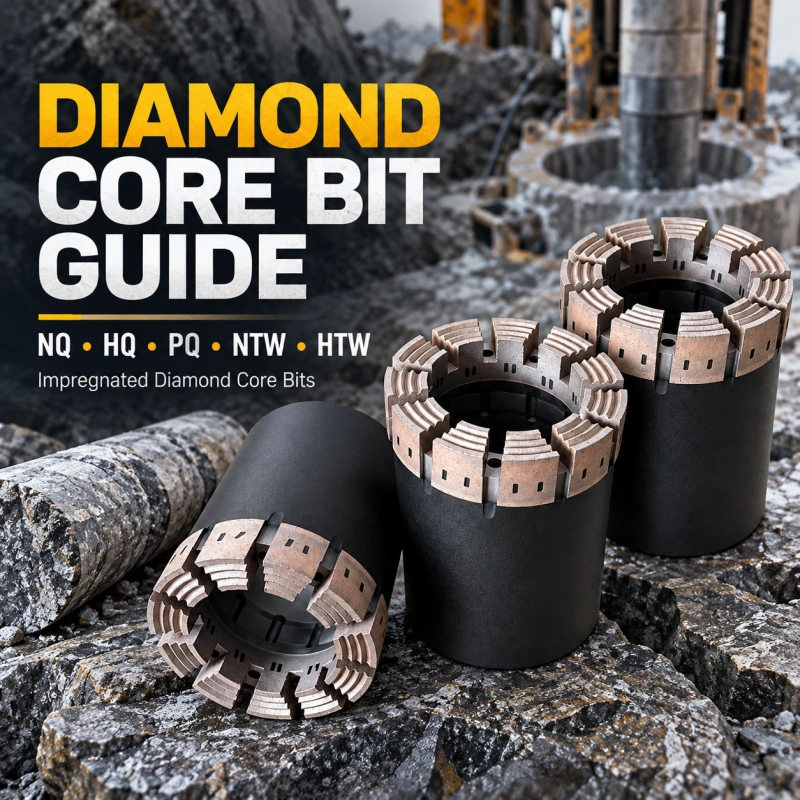
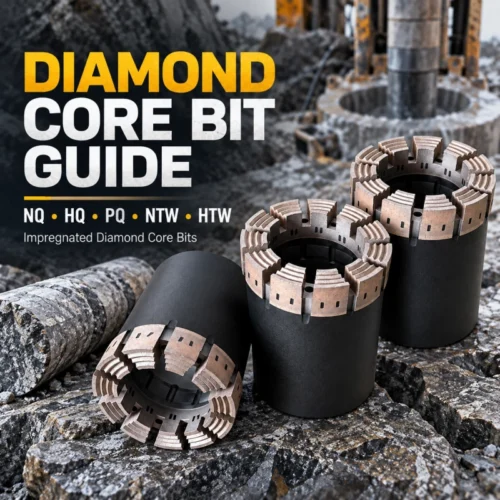
Diamond core drilling is widely used when the goal is to recover a good cylindrical sample of the formation. One of the most important tools in this system is the impregnated diamond core bit.
Choosing the right bit is more complex than just matching the diameter. Formation hardness, abrasiveness, fracturing, drilling settings, flushing and matrix traits all affect performance.
Quick summary: Impregnated diamond bits work by controlled matrix wear. If the matrix wears too slowly, the bit polishes. If it wears too fast, diamonds are lost early. In short, the goal is steady wear, not maximum wear resistance.
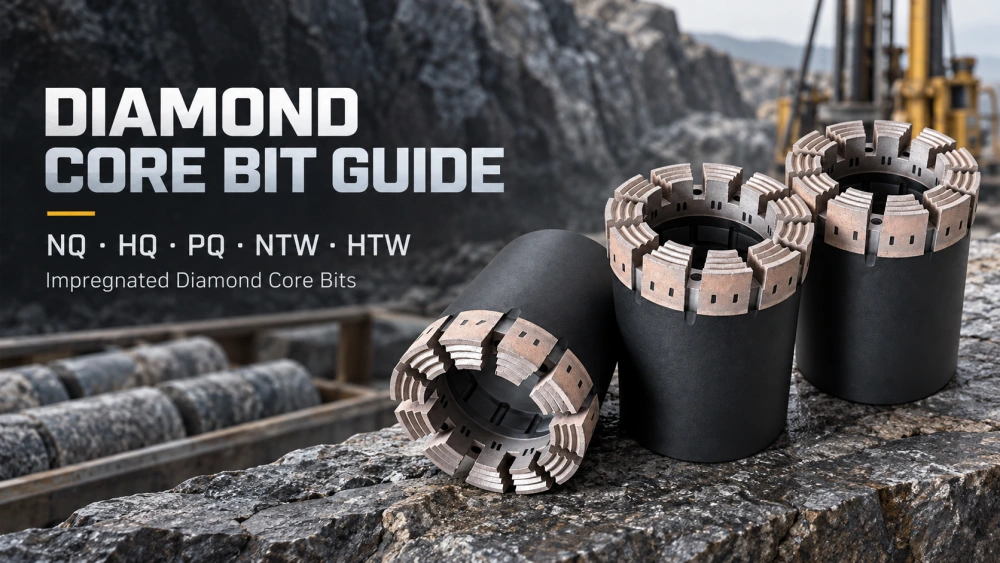
What Is an Impregnated Diamond Bit?
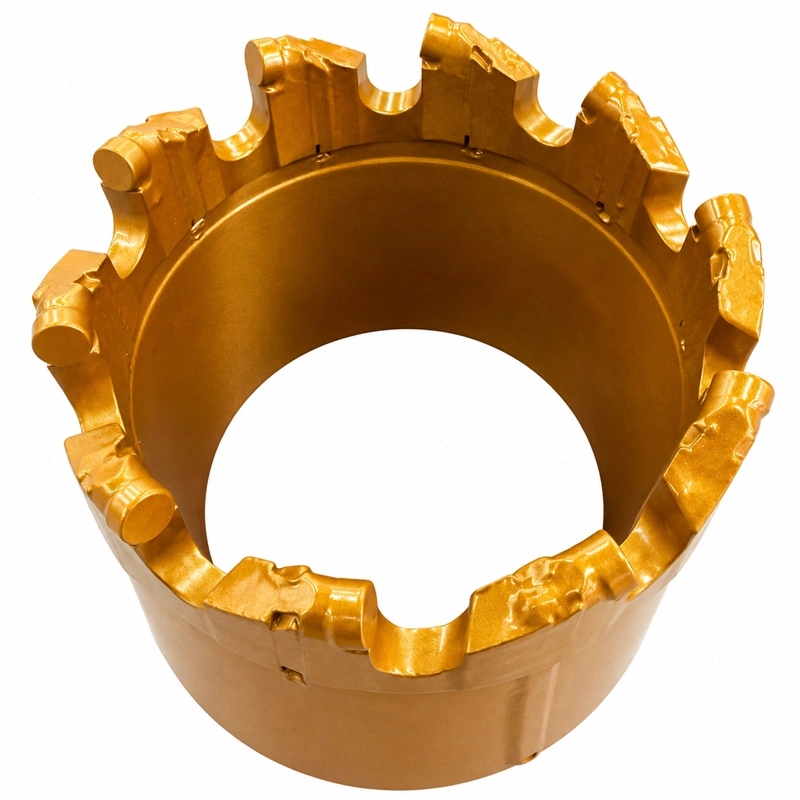
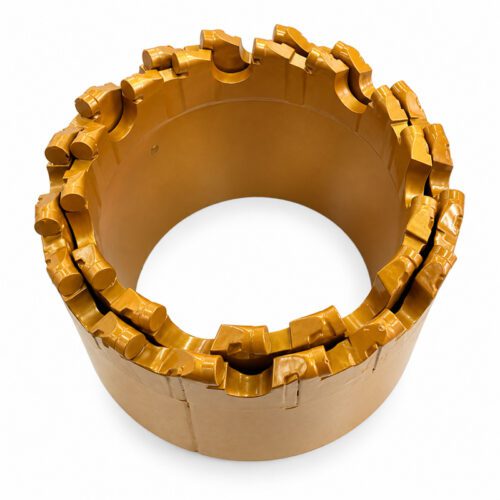
In an impregnated diamond core bit, small synthetic diamond particles are spread through a metal matrix in the cutting crown. During drilling, the matrix wears down little by little.
As worn diamonds lose their edge, controlled matrix wear exposes new diamond cutting points. Because of this, this self-renewing action is one of the base ideas behind impregnated diamond drilling.
Why Matrix Selection Matters
If the matrix acts the wrong way for the formation, two opposite problems can appear.
Matrix Wears Too Slowly
If the metal around the diamond does not wear enough, worn diamonds may stay on the cutting surface without new points coming out. As a result, the bit can start to polish and penetration drops.
Matrix Wears Too Quickly
If the matrix wears too fast, useful diamonds may be lost before their cutting potential is used. Because of this, bit life can fall a lot.
In short, the goal is controlled wear — not the hardest matrix and not the softest.
Hardness Is Not the Only Factor
It is common to group formations by hardness. However, hardness alone is not enough. Bit selection may also be affected by:
- Abrasiveness
- Grain size
- Fracturing
- Mineral content
- Competency
- Formation changes
For example, two rocks with similar hardness can still wear the matrix in different ways because their abrasiveness differs. Therefore, formation type should be described in more than one word.
Changing Formations
Exploration holes often pass through several rock types. A bit that works well in one interval may meet very different ground deeper in the hole.
When formations change often, the selection must think about the expected drilling interval — not only the rock at the collar of the hole. In short, plan for the whole hole, not just the first meter.
Penetration Rate vs Bit Life
The longest-lasting bit is not always the most productive bit. If an extremely wear-resistant setup drills very slowly, total shift output may drop.
On the other hand, an aggressive bit that cuts fast but wears out early can lead to too many rod trips and higher replacement cost.
The right goal is a practical balance between:
- Penetration rate
- Bit life
- Core recovery
- Tripping time
- Overall drilling cost
Water Flow and Flushing
Flushing matters a lot in diamond drilling. It helps:
- Cool the cutting face
- Remove cuttings
- Keep the bit working on fresh rock
- Carry material away from the crown
Wrong circulation can hurt bit performance and core quality.
Rotation and Feed
Diamond bits also need the right rotational speed and feed force. Too little load may cause weak cutting. However, too much load can raise torque, wear or core disturbance.
Because the right range changes with bit size, formation and drilling system, fixed numbers should not be used for every project.
Tip: If the bit polishes instead of cutting, the problem may be feed, RPM or matrix choice — not diamond quality. In other words, check settings before blaming the crown.
Observe the Crown
A used diamond bit can give useful clues. Operators should check:
- Diamond exposure
- Matrix wear
- Crown profile
- Waterway condition
- Inner diameter
- Outer diameter
- Uneven wear
The crown condition can help show whether the matrix and drilling settings were a good match.
| Crown Sign | Possible Meaning |
|---|---|
| Shiny, polished crown | Matrix too hard or feed too light |
| Rounded, fast-wearing crown | Matrix too soft or formation too abrasive |
| Uneven crown wear | Bit not running true or wrong feed |
| Blocked waterways | Poor flushing or cuttings build-up |
| Inner or outer diameter wear | Wrong gauge protection or abrasive rock |
Common Core Sizes
Exploration drilling commonly uses standard core systems such as:
Other systems, including thin-wall and special wireline setups, are also available. Always match the bit to the exact core barrel system, not just the nominal outside diameter.
Practical Ordering Information
When asking for an impregnated diamond core bit, please provide:
| Item | Why It Helps |
|---|---|
| Core system and size | Matches the bit to the core barrel |
| Formation type | Guides matrix and diamond choice |
| Approximate hardness | Helps set matrix wear rate |
| Abrasiveness if known | Very important for matrix choice |
| Degree of fracturing | Affects impact load and bit stability |
| Current bit performance | Shows what works and what does not |
| Drilling depth | Affects flushing and expected bit life |
| Water or fluid conditions | Affects cooling and cuttings removal |
In addition, photos of worn bits can help with later selection.
Frequently Asked Questions
What is an impregnated diamond core bit?
It is a core bit with small synthetic diamonds spread through a metal matrix in the crown. As the matrix wears in a controlled way, new diamond points keep coming out and cutting the rock.
Why does the matrix matter so much?
Because the matrix controls how fast new diamonds are exposed. If it wears too slowly, the bit polishes. If it wears too fast, diamonds are lost early. Therefore, the right matrix gives steady wear.
Is a longer-lasting bit always the best choice?
No. A bit that lasts a long time but drills very slowly may lower total shift output. The best choice balances penetration rate, bit life, core recovery and overall drilling cost.
What should I check on a used diamond bit?
Check diamond exposure, matrix wear, crown profile, waterway condition, inner and outer diameter and uneven wear. These signs help show if the matrix and drilling settings were a good match.
What information should I provide when ordering?
Provide the core system and size, formation type, approximate hardness, abrasiveness, degree of fracturing, current bit performance, drilling depth and fluid conditions. Photos of worn bits also help.
Conclusion: Balance Beats Maximum Wear Resistance
There is no single impregnated diamond matrix that is ideal for all formations. Good selection needs controlled matrix wear, enough diamond exposure, and a good match with the rock and drilling settings.
In short, the right bit is not always the one that lasts the longest. Instead, it is the one that gives reliable core at an efficient total drilling cost.
Need help choosing an impregnated diamond core bit for your formation? Send us your core size, rock type and drilling details. Our team will recommend a suitable matrix and crown.
Share your core system, formation info, drilling depth and fluid conditions. Photos of worn bits also help a lot for accurate selection.






 English
 Chinese
 Portuguese
 French
 Spanish
 Russian
 Turkish
 Vietnamese