

Công nghệ mũi khoan PDC: Cách thiết kế lưỡi cắt, hệ thống thủy lực và sự phù hợp với địa tầng giúp nâng cao hiệu suất khoan
Cutter layout, blade geometry, waterway design and formation matching explained
PDC drill bit technology has changed a lot over the past few decades. What began as a fixed-cutter method has grown into a highly engineered system with cutter materials, blade geometry, cutter placement, bit profiles, waterways, gauge protection and application-specific designs.
Today, PDC bits are widely used in water wells, geological exploration, mining, geothermal projects, grouting, anchoring, foundation work and many other applications.
However, good PDC drilling depends on much more than choosing the right diameter. The real question is: how well does the cutting structure match the formation, the rig and the operating settings?
Quick summary: PDC performance comes from the full cutting system — cutters, blades, profile, waterways and gauge protection — matched to the formation and the rig. In short, the right bit is the one built for this borehole, not for a catalogue.
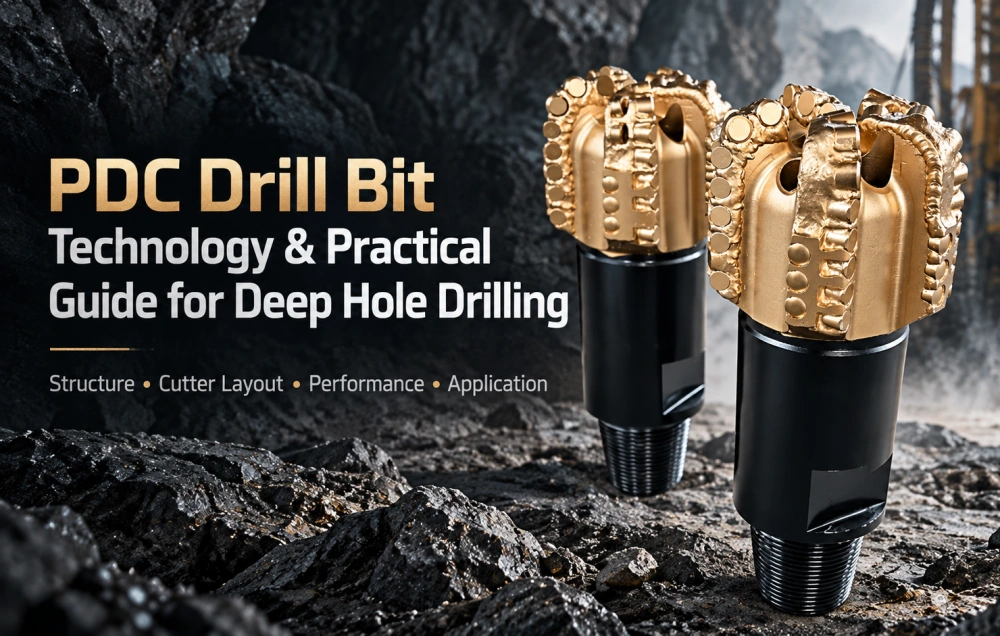
What Is a PDC Drill Bit?
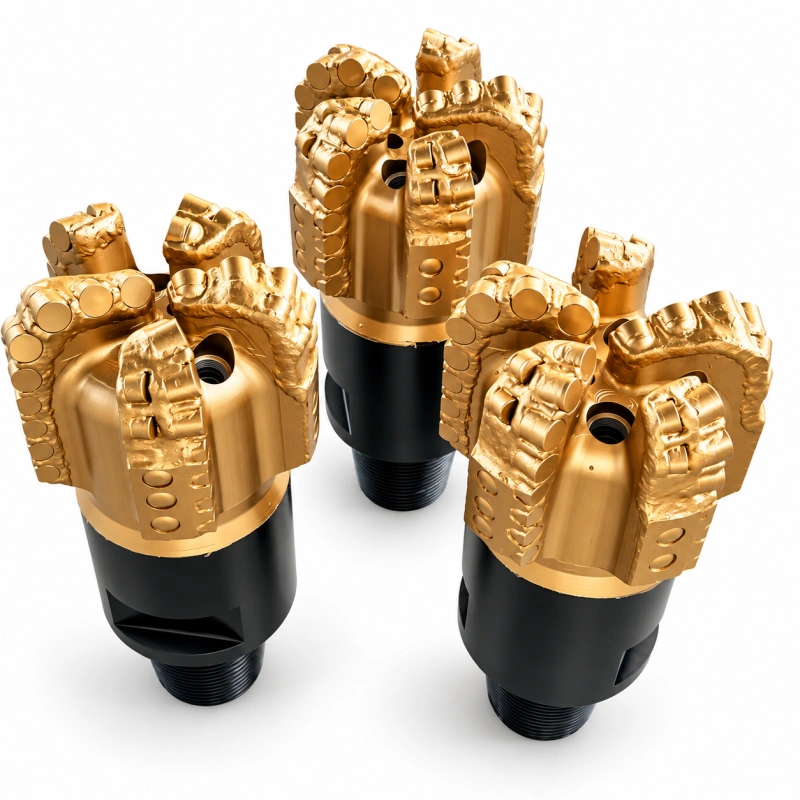
PDC stands for Polycrystalline Diamond Compact. The cutters on a PDC bit usually have a diamond layer bonded to a tungsten carbide base. These cutters sit at carefully chosen positions and angles around the bit face.
As the drill string turns, the cutters meet the bottom of the hole and remove rock mainly by shearing. This is very different from a roller cone bit, which breaks rock mainly by indentation, crushing and scraping.
Because of this, PDC bits can reach strong penetration when the cutter structure is matched well to the formation.
Why PDC Cutters Are So Effective
Diamond is very hard and resists abrasive wear. However, hardness alone does not explain PDC performance. The real strength comes from combining a wear-resistant edge with an optimized cutting shape.
During drilling, the cutter bites slightly into the rock. As torque turns the bit, the cutter shears a layer of rock away. Hundreds or thousands of these cuts happen as the bit turns.
When conditions are right, this lets the bit remove rock fast while keeping a fairly sharp edge. The result can be:
- High penetration rate
- Stable drilling
- Long cutting life
- Fewer bit changes
- Lower drilling cost per meter
However, these gains depend heavily on bit design and formation. A premium cutter placed in the wrong cutting structure will not perform well on its own.
A Modern PDC Bit Is a Complete Cutting System
A PDC bit should not be judged by cutter count alone. Several parts work together.
PDC Cutters
Cutters do the main rock-breaking work. Their diameter, grade, exposure, position and angle affect aggressiveness, durability and efficiency.
Blades
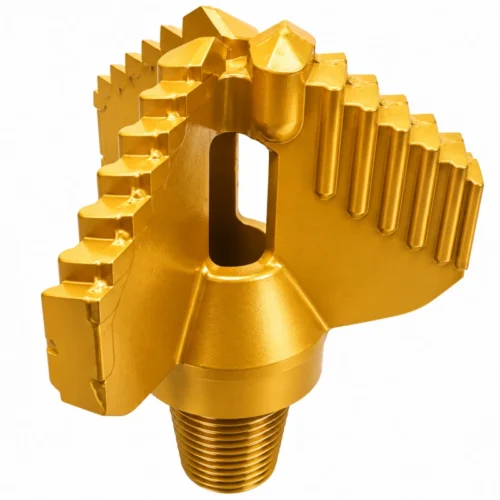
Blades hold and position the cutters. Blade shape also affects stability and the open area for fluid and cuttings flow.
Bit Profile
The profile decides how the center, nose, shoulder and gauge areas meet the borehole. Different profiles give different mixes of aggressiveness, durability and steering stability.
Waterways and Fluid Channels
These passages move drilling fluid or flushing media across the bit face. They do more than carry fluid. They help cool the cutters and carry fresh cuttings away from the bottom of the hole.
Gauge Protection
The gauge area helps keep the borehole at the right size. Good gauge protection also helps bit stability and reduces wear around the outside diameter.
In short, all of these parts must work together.
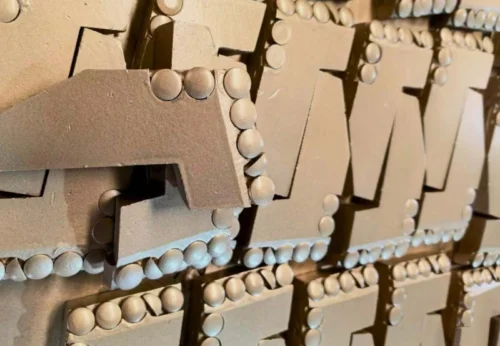
Cutter Layout: One of the Most Important Parts of PDC Design
One big myth about PDC bits is that more cutters always mean better performance. That is not always true.
Every cutter on a PDC bit travels a different path depending on its distance from the center. For example, a cutter near the outer diameter travels much farther in each turn than a cutter near the center. As a result, cutter load and wear are not even across the face.
A good cutter layout must think about:
- Cutter position
- Radial distance
- Cutting speed
- Cutter exposure
- Back rake
- Side rake
- Formation hardness
- Abrasiveness
- Expected impact load
The goal is to spread the cutting work as evenly as possible. Poor cutter spread can cause some cutters to carry too much load while others do little. This may lead to:
- Local cutter wear
- Cutter chipping
- Uneven bit wear
- Higher torque
- Vibration
- Lower penetration rate
In short, good cutter layout helps create a more balanced cutting structure.
Why Cutter Angle Matters
PDC cutters are not normally set straight up against the rock. Their angle is designed to control how hard they bite into the formation. One key setting is back rake.
Changing the cutter angle changes the balance between aggressiveness and durability. A more aggressive setup may raise penetration in the right conditions, but it can also raise cutter load. On the other hand, a more conservative angle may give up some speed while improving stability and impact resistance.
Because of this, a bit designed for soft sandstone should not automatically use the same cutter setup as one made for harder limestone or mixed rock. In short, the formation should guide the design — not the other way around.
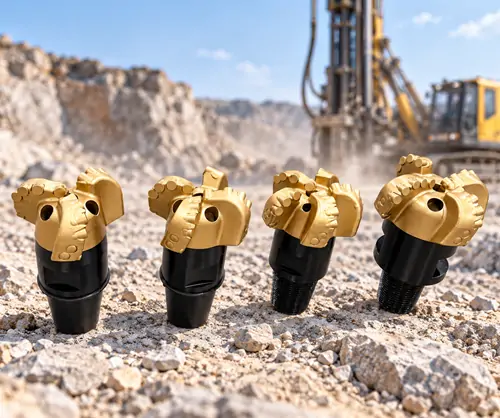
Three-Wing, Four-Wing or Five-Wing PDC Bit?
Customers often ask which blade setup is best. There is no single answer.
Three-Wing PDC Bits
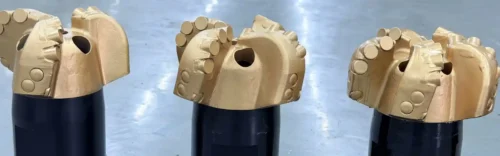
A three-wing structure generally gives larger space between blades. This can help cuttings move away from the cutting face. Three-wing setups can give an aggressive cut in suitable soft to medium rock, and are often used for water wells, grouting, coal, mudstone, soft sandstone and construction drilling.
Four-Wing PDC Bits
Four-wing structures can give a useful balance between cutting aggressiveness, cutter spread and drilling stability. Therefore, four-wing PDC designs are widely used in water wells, geothermal drilling, anchor holes, grouting holes, foundation work and mining projects.
Five-Wing and Multi-Wing PDC Bits
More blades let more cutters be spread across the face. Depending on the design, this can help spread cutter load and improve stability. Multi-wing designs may be chosen where extra durability or smoother cutting is needed.
However, more blades also reduce the open area between them. Because of this, the design must still keep enough space for cuttings to flow out. This shows an important rule: PDC bit design is always a balance.
Hydraulics and Flushing: The Part Many Buyers Ignore
Cutting rock is only half of the job. The broken rock must also leave the bottom of the hole. If cuttings stay around the bit face, the cutters may keep grinding old material instead of fresh rock. This wastes energy and lowers efficiency.
Good flushing does several important jobs:
- Removes rock cuttings
- Cleans the cutting face
- Helps cool PDC cutters
- Reduces recutting
- Reduces material build-up
- Keeps penetration steady
Because of this, waterway size and position are a key part of PDC design. A bit with great cutters but poor cuttings removal can still perform badly.
Understanding Bit Balling
Bit balling is a common problem in sticky formations such as some clays, shale and mudstone. Soft material can build up around the cutters and blades. Over time, the cutting elements get partly covered and can no longer bite fresh rock well.
The operator may notice:
- Falling penetration rate
- Rising torque
- Unstable drilling
- Poor cuttings return
Good blade spacing, waterway design and flushing can help reduce this problem. For sticky formations, simply adding more cutters may actually make things worse if it reduces the cleaning area.
PDC Bits in Soft to Medium Formations
PDC technology works well in many fairly uniform soft and medium-strength formations. Depending on the design, these may include clay, mudstone, shale, coal, sandstone, red sandstone, limestone, dolomite, marl, weathered rock and selected medium-hard rock.
However, simply calling rock “soft,” “medium” or “hard” is not enough. Two rocks with similar strength may behave very differently during drilling.
Hardness Is Not the Only Formation Parameter
When choosing a drill bit, we suggest looking at at least four formation factors:
| Factor | Key Question |
|---|---|
| Rock strength | How much force is needed to break the rock? |
| Abrasiveness | How fast does the rock wear cutters and body? |
| Fracture condition | Is the rock uniform, fractured or broken? |
| Interbedding | Does the hole switch between soft and hard layers? |
These factors can change PDC performance a lot. For example, a fairly strong but uniform formation may be easier on cutters than a broken formation that causes repeated impact. Because of this, experienced makers ask about formation details before suggesting a cutting structure.
Are PDC Bits Suitable for Hard Rock?
Modern PDC technology has moved into harder and tougher formations. Better cutters, improved cutter shapes, stronger stabilization and application-specific designs have widened the usable range of fixed-cutter tools.
However, this does not mean a PDC bit is always the best answer for hard rock. Highly abrasive rock, strong impact, gravel, heavy fractures and fast-changing hard/soft layers can be tough on PDC cutters.
Depending on the project, other options may include:
- TCI tricone bits
- Steel-tooth tricone bits
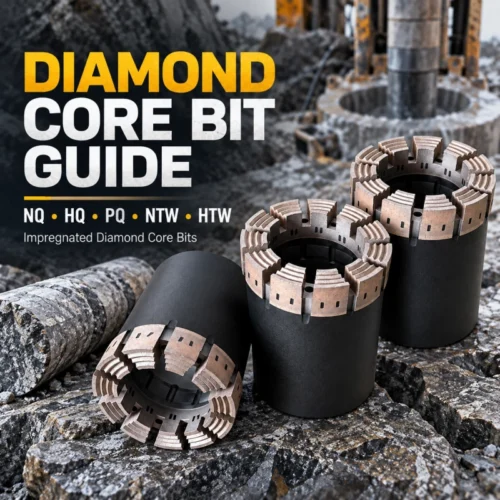
- Impregnated diamond core bits
- Surface-set diamond bits
- Tungsten carbide cutting structures
- DTH drilling tools
In short, professional selection is not about forcing one technology into every hole. It is about finding the most economical cutting solution for the actual formation.
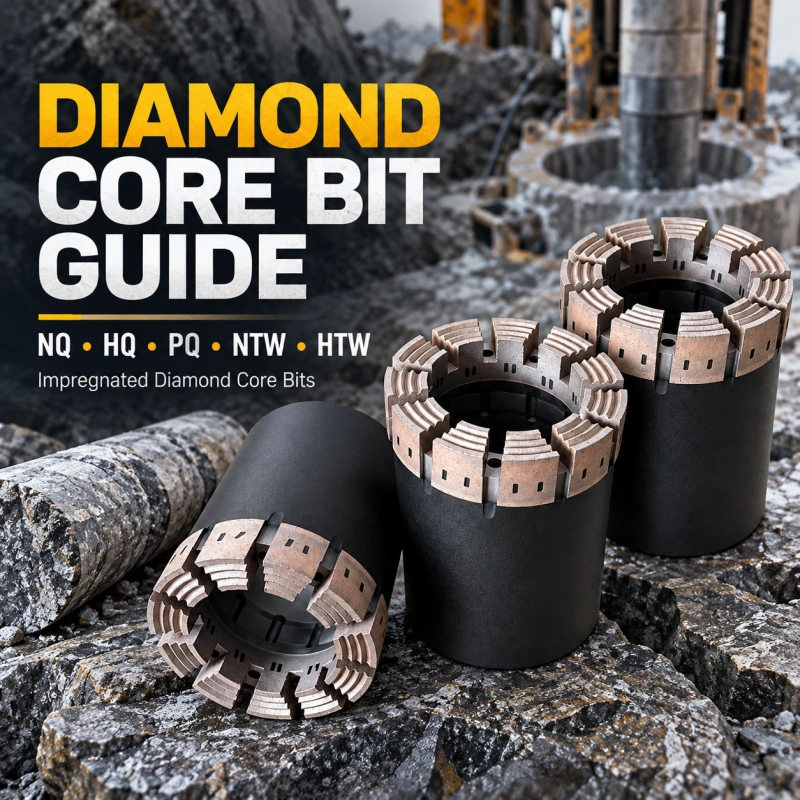
PDC Core Bit Technology
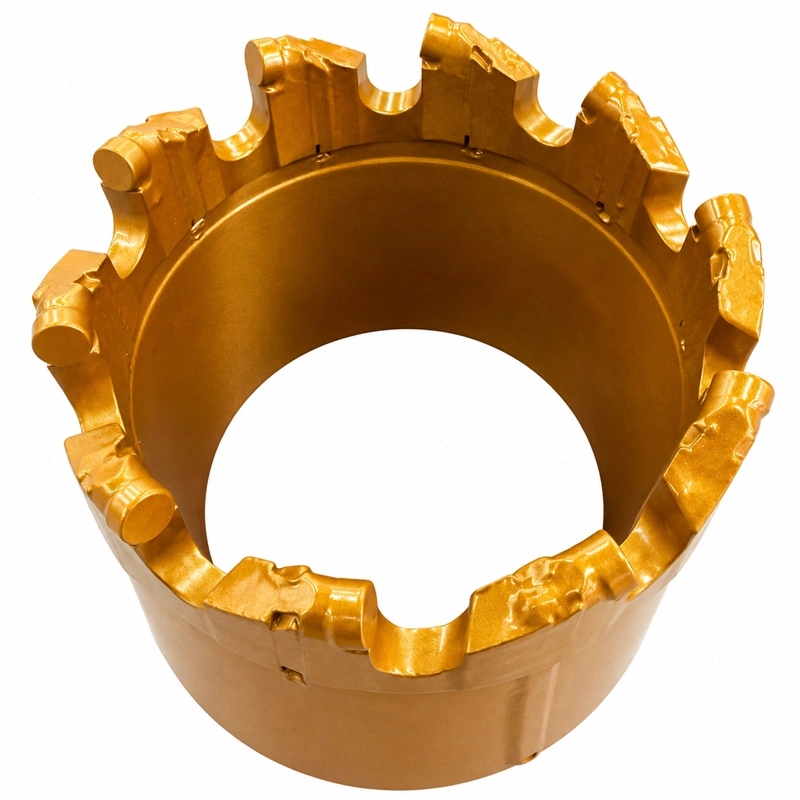
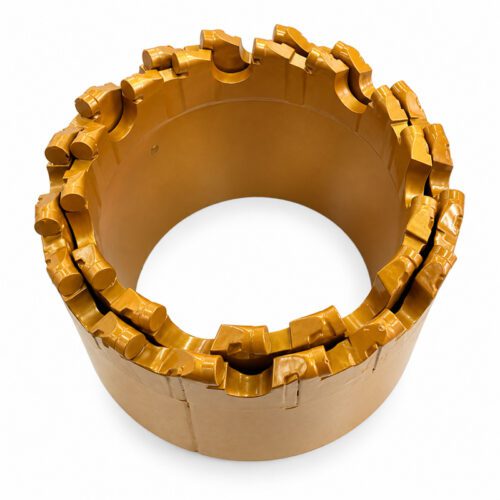
PDC technology is not limited to full-face drilling. It is also widely used in core drilling. A PDC core bit removes an annular ring of rock while leaving the center intact, so a rock core can enter the core barrel.
This makes PDC core bits useful for geological exploration, rock sampling, engineering investigation, mineral exploration, water well investigation and formation evaluation.
The design goals differ from a non-coring bit. A PDC core bit must cut efficiently while also keeping enough stability to protect the core sample.
Combination-Cutter PDC Core Bits
For some geological drilling jobs, combination-cutter designs can give a useful balance between penetration, cutter spread and wear resistance. The cutting elements are laid out around the annular crown based on bit diameter, core diameter, formation, penetration needs, rig settings and flushing conditions.
These designs matter a lot in export markets, where rigs and geology can differ widely between customers. Because of this, we supply custom PDC core drilling solutions based on real requirements, not one standard setup for every project.
PDC Drill Bit Operating Practices
Even the right bit can fail early if it is run the wrong way. A few operating rules are worth following.
Inspect the Borehole Before Running a New Bit
Before fitting a new bit, check whether broken cutter pieces, carbide, metal parts or other debris remain at the bottom of the hole. Downhole debris can badly damage a new PDC structure.
Start With Controlled Parameters
When a new bit first touches bottom, avoid pushing aggressive settings right away. Establish stable drilling and confirm normal circulation, then adjust conditions step by step.
Maintain Sufficient Flushing
Cuttings should be carried away from the cutting face at all times. Poor circulation can lower penetration and raise cutter temperature.
Avoid Excessive Impact and Vibration
PDC cutters resist wear well, but they can still suffer impact damage. Strong vibration can cause cutter chipping, uneven wear and shorter bit life.
Monitor Changes in Drilling Performance
Sudden changes in torque, penetration rate, vibration, pressure or cuttings return may point to a change in formation or downhole conditions. Experienced drillers treat these changes as information, not just a reason to push more weight on bit.
Why “More Weight” Does Not Always Mean Faster Drilling
When penetration slows, one common reaction is to add more pressure. However, this is not always the right fix. If the problem comes from poor cuttings removal, bit balling, cutter damage or a wrong cutting structure, adding weight may make things worse.
Drilling performance should be seen as a system:
WOB + RPM + Torque + Flushing + Formation + Bit Design
Changing one setting affects the others.
Tip: In many projects, slow penetration is caused by poor cleaning, not by a dull bit. In other words, check cuttings return and flushing before adding more weight.
Reading a Used PDC Bit
One of the best sources of drilling information is often the bit that just came out of the hole. A used bit can give clues about what happened downhole.
| Wear Sign | Possible Cause |
|---|---|
| Heavy shoulder wear | High shoulder load, abrasive rock, wrong profile |
| Broken or chipped cutters | Impact, vibration, mixed layers, downhole debris |
| Severe gauge wear | Abrasive contact or weak gauge protection |
| Material packed around blades | Poor cleaning or bit balling |
| Uneven wear between blades | Drilling instability or uneven cutter load |
For customers with poor drilling results, we often suggest sending clear photos of the used bit. Those photos can help find the real problem before the next bit is made.
Steel-Body and Matrix-Body PDC Technology
Modern PDC bits can use either steel or tungsten-carbide matrix bodies. Neither is always “better.”
Steel bodies offer high toughness and allow flexible blade shapes and fairly large cuttings channels. Matrix bodies offer strong resistance to abrasion and erosion. Therefore, the best body material depends on the drilling job.
For many water well, mining, construction and engineering PDC tools, body design should be judged together with the cutter setup and the working environment.
Wear Protection Is Still Important
PDC cutters get most of the attention, but the surrounding bit structure must also survive drilling. A bit body can face:
- Formation abrasion
- Cuttings erosion
- Fluid erosion
- Gauge contact
- Impact
- Repeated mechanical load
Because of this, wear-resistant materials and hardfacing can be added to critical areas of suitable steel-body tools. The goal is to protect the support structure so the cutters can keep working in their intended positions.
How Chenghui Approaches PDC Bit Selection
We believe a drill bit should be chosen around the borehole, not just around a catalogue. Before suggesting a custom PDC bit, this information is very useful:
| Item | What to Provide |
|---|---|
| Bit diameter | Borehole size you need |
| Formation | Sandstone, mudstone, coal, limestone, dolomite, shale, weathered or mixed rock |
| Drilling application | Water well, exploration, mining, geothermal, anchoring, grouting, foundation or core drilling |
| Connection | Thread or drill-string connection needed |
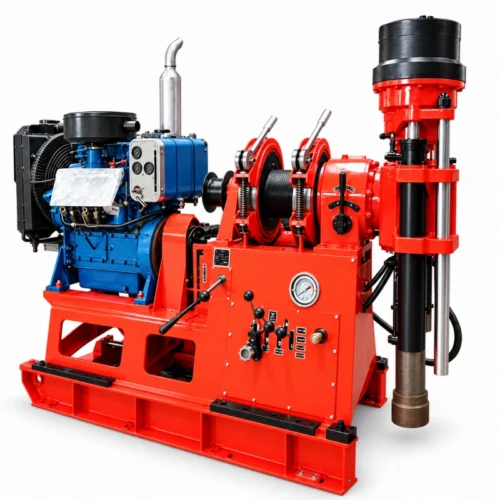
| Drilling equipment | Rig model and key parameters |
| Existing bit performance | What bit you use now and what problem you want to solve |
The last point is especially important. Sometimes the customer does not need a totally different bit. They may only need a change in cutter layout, blade setup, flushing or wear protection.
Customized PDC Drill Bits for Different Projects
Our PDC tools can be reviewed and made to project needs. Depending on the product and application, changes may involve:
- Bit diameter
- Blade quantity
- Cutter specification and quantity
- Cutter layout
- Cutting profile
- Waterway design
- Gauge protection
- Connection
- Body dimensions
- Application-specific reinforcement
Common PDC diameters include:
75 mm · 91 mm · 94 mm · 108 mm · 113 mm · 133 mm · 142 mm · 152 mm · 171 mm · 245 mm · 275 mm · 300 mm · 325 mm
Other sizes can also be reviewed. Common connections may include:
2 3/8 REG · 2 7/8 REG · 3 1/2 REG · 4 1/2 REG · NC23 · NC26 · NC31 · NC38 · Z-50
Actual availability should be confirmed against the product structure and dimensions.
From Drill Bit Price to Drilling Cost per Meter
A professional drilling company should rarely choose a bit by purchase price alone. Imagine two bits:
- Bit A costs less but drills 100 meters before replacement.
- Bit B costs more but drills 300 meters with a higher average penetration rate.
Which is cheaper? The answer depends on the full drilling economics. Important factors include bit price, total meters drilled, penetration rate, bit change time, rig downtime, labor, fuel or energy use, string trips and the risk of downhole failure.
Because of this, the more useful calculation is:
Total Drilling Cost ÷ Total Meters Drilled
In short, bit life and drilling efficiency must be judged together.
The Future of PDC Drill Bit Technology
PDC technology keeps changing. Modern work is focused more and more on:
- Better impact resistance
- Better thermal stability
- Advanced cutter shapes
- More efficient cuttings removal
- Better drilling stability
- Better wear protection
- Formation-specific cutting structures
- Computer-assisted design
- More accurate field-performance analysis
The direction is clear. The industry is moving away from a universal drill bit and toward application-specific drilling solutions. For drillers, that means good performance increasingly depends on communication between the drilling site and the bit maker.
Frequently Asked Questions
What makes a PDC drill bit perform well?
Performance comes from the full cutting system: cutter quality, cutter layout, blade design, bit profile, waterway design and gauge protection — all matched to the formation and the rig.
Do more cutters always mean better performance?
No. More cutters do not always help. Cutter layout, load spread and cleaning area matter just as much. In some soft or sticky formations, adding more cutters can even reduce cleaning space and make bit balling worse.
Why is waterway design so important on a PDC bit?
Because rock must be removed as well as cut. Good waterways clean the cutter face, cool the cutters and carry cuttings away. Without good flushing, penetration drops even if the cutters are in good shape.
Are PDC bits suitable for hard rock?
Some modern PDC designs can drill fairly hard rock. However, highly abrasive or badly fractured formations may suit tricone bits, impregnated diamond core bits or DTH tools better. The right choice depends on the formation and the total drilling cost.
What information should I provide before ordering a PDC bit?
Provide bit diameter, formation type, drilling application, connection, rig model and current bit performance. Photos of the rock, cuttings or a used bit are also very useful for accurate selection.
Conclusion: The Right PDC Bit Starts With the Right Information
PDC technology can give excellent drilling efficiency, but only when the cutter structure, bit geometry, hydraulics and operating settings are matched to the formation.
So the most important question is not “which PDC bit is the best?” It is “which PDC bit is best for this formation, this rig and this project?”
If you are planning a water well, geological exploration, mining, geothermal, anchoring, grouting or construction drilling project, send us your bit diameter, formation, drilling depth, application, connection and rig model. If possible, also send photos of the rock, cuttings, core samples or your current bit.
In short, the more we understand before manufacturing, the better we can match the tool to the real conditions underground.
Need a PDC bit matched to your formation and rig? Send us your drilling conditions and our team will recommend a suitable cutter layout, blade design and waterway setup.
Share your bit diameter, formation, drilling depth, application, connection and rig model. Photos of rock, cuttings or used bits also help a lot.







 English
 Chinese
 Portuguese
 French
 Spanish
 Russian
 Turkish
 Vietnamese