

Mũi khoan PDC: Các loại, ưu điểm, ứng dụng và hướng dẫn lựa chọn
How to choose the right PDC bit by formation, blade design, cutter layout and connection
PDC drill bits have become one of the most widely used cutting tools in modern drilling. From water wells and geological exploration to mining, geothermal drilling, anchoring, grouting and construction, the right PDC bit can give fast penetration, stable drilling and strong wear resistance in suitable formations.
However, not every PDC bit is the same. Blade number, cutter size, cutter layout, bit profile, waterways, gauge protection, body structure and connection can all change performance.
Because of this, choosing a PDC bit should never be based on diameter alone.
In this guide, we explain how PDC bits work, their main types, suitable formations, key design features and how to select the right bit for your project.
Quick summary: A good PDC bit is not the one with the most cutters. It is the one whose cutting structure, body and flushing system match the rock and the rig. In short, match the bit to the formation, not just to the diameter.
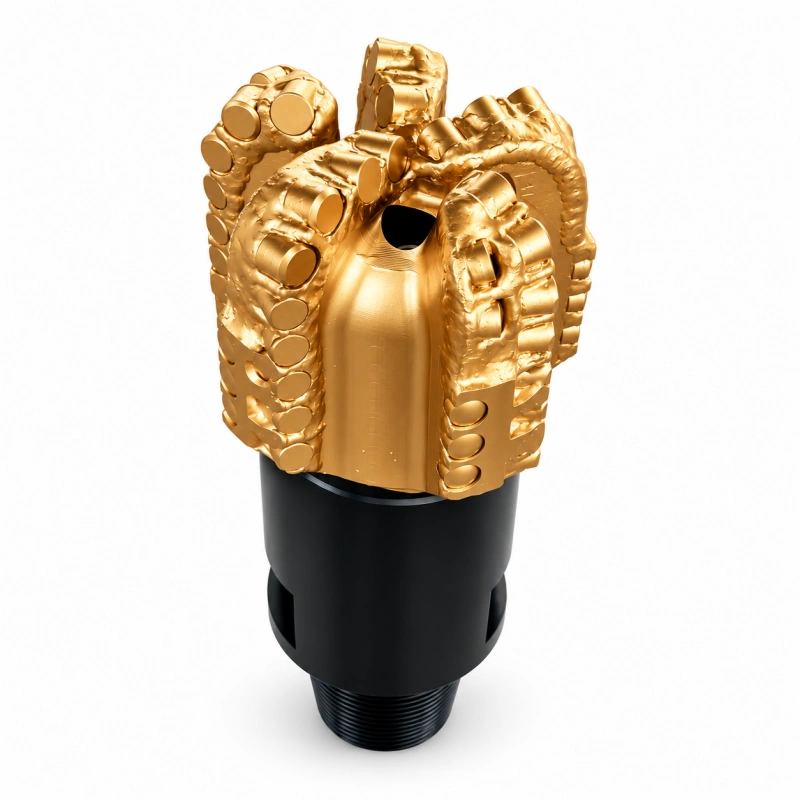
What Is a PDC Drill Bit?
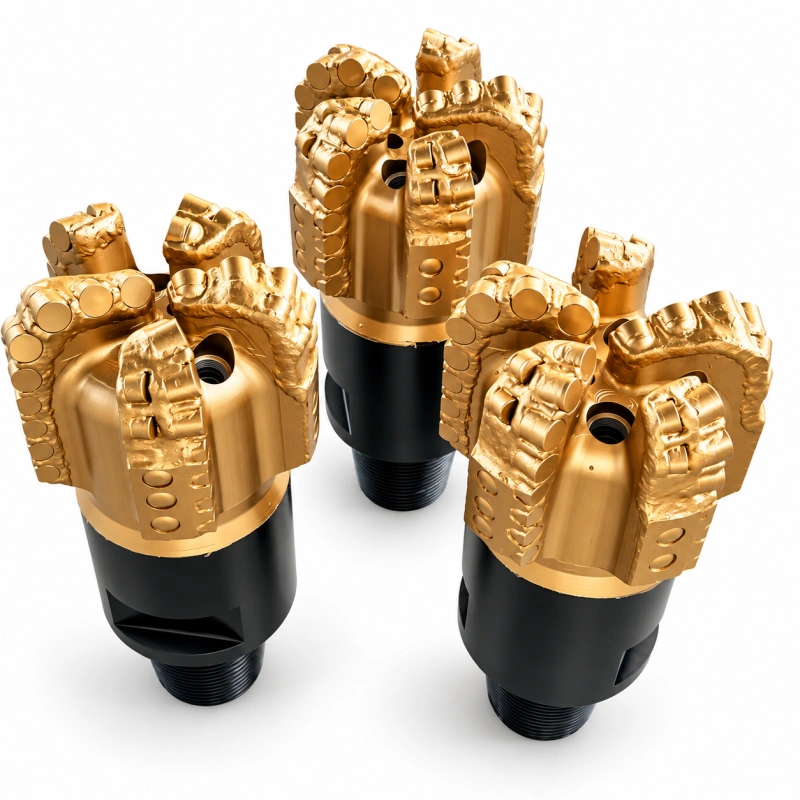
PDC stands for Polycrystalline Diamond Compact. A PDC cutter has a diamond layer bonded to a tungsten carbide base. These cutters sit on the cutting face of the bit and remove rock mainly by shearing as the bit turns.
Compared with methods that mainly crush the rock, shearing can remove rock efficiently when the cutting structure matches the formation. Because of this, PDC bits can reach high penetration rates in many soft, medium and selected hard formations.
A complete PDC bit is more than a group of diamond cutters. Its performance depends on how these parts work together:
- PDC cutter quality
- Cutter size and quantity
- Cutter exposure
- Back rake and orientation
- Blade geometry
- Bit profile
- Waterway design
- Gauge protection
- Body strength
- Drilling parameters
Therefore, the best bit is not always the one with the most cutters. Instead, it is the one whose cutting structure matches the rock and the drilling conditions.
How Does a PDC Drill Bit Work?
As the drill string turns, the PDC cutters move across the bottom of the hole. Each cutter shears away a thin layer of rock. At the same time, the drilling fluid or flushing medium must carry those cuttings away from the bit face and out of the hole.
Three actions happen at the same time:
Cutting → Cooling → Cuttings Removal
All three matter. For example, a strong cutting structure without good cleaning can cause bit balling and lower penetration. Meanwhile, good hydraulics cannot fix a bit that was wrongly chosen for the formation.
In addition, even a top-quality PDC cutter can suffer early damage if vibration, impact or drilling settings are too heavy. As a result, a well-designed PDC bit balances the cutting structure, bit body and flushing system as one complete system.
Main Types of PDC Drill Bits
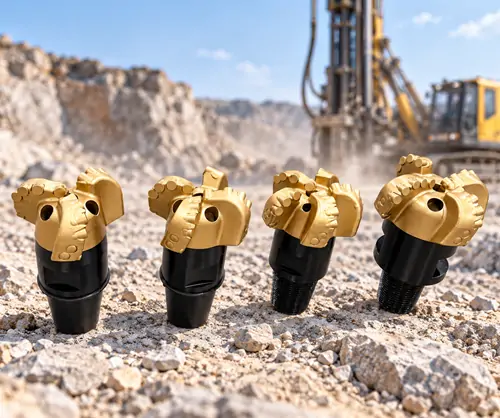
Different projects need different cutting structures. At Chenghui, PDC bits can be made in several configurations according to formation, application, equipment and customer needs.
1. Concave PDC Drill Bits
Concave PDC bits use a recessed center profile that helps with centering and drilling stability. Common setups include 3-wing and 4-wing concave PDC bits, plus customized multi-wing designs.
They are often considered for water wells, geothermal drilling, grouting holes, gas drainage holes, construction drilling and soft to medium formations. Because of the concave shape, they can give good directional stability while keeping an aggressive cut.
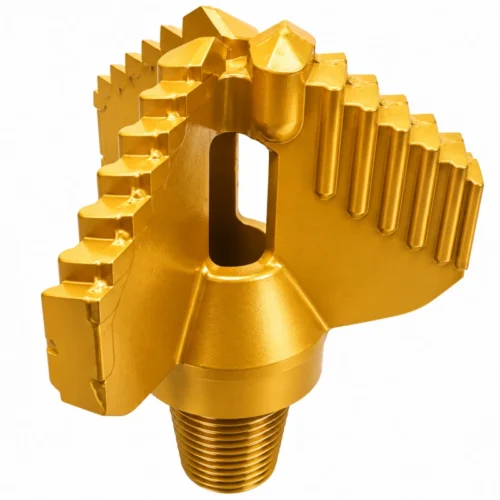
2. PDC Drag Bits
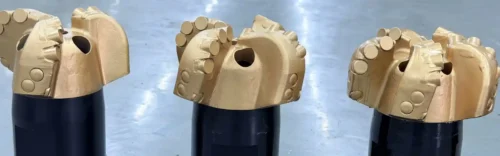
PDC drag bits use several blades or wings fitted with PDC cutters. Typical designs include 3-wing, 4-wing and 5-wing drag bits, plus custom blade layouts.
They are widely used where fast penetration is needed in suitable formations, such as water wells, geothermal projects, foundation drilling, grouting, slope reinforcement, anchor holes, mining and construction.
A lower blade count generally gives larger space for cuttings and a more aggressive cut. Adding blades may improve cutter spread and stability, depending on the formation and design. Therefore, the right setup should be chosen by real drilling conditions.
3. Spiral PDC Drill Bits
Spiral PDC bits have curved or spiral blade structures. These are designed for smooth cutting contact and efficient cuttings movement. Common setups include 3-wing, 4-wing, 5-wing and 6-wing spiral PDC bits.
They can be used for anchor drilling, blasting holes, slope reinforcement, foundation pits, water wells, geothermal drilling, mining and construction. Depending on the design, spiral blades can help spread cutter load and improve drilling stability.
4. Flat-Top PDC Drill Bits
Flat-top PDC bits use a fairly simple and strong cutting structure. They can offer a low-cost solution for suitable formations and are available in many diameters and cutter setups.
They are often used for water wells, grouting, soft formation drilling, construction holes and mining-related drilling. In addition, cutter quantity and layout can be adjusted for more durability or a more aggressive cut.
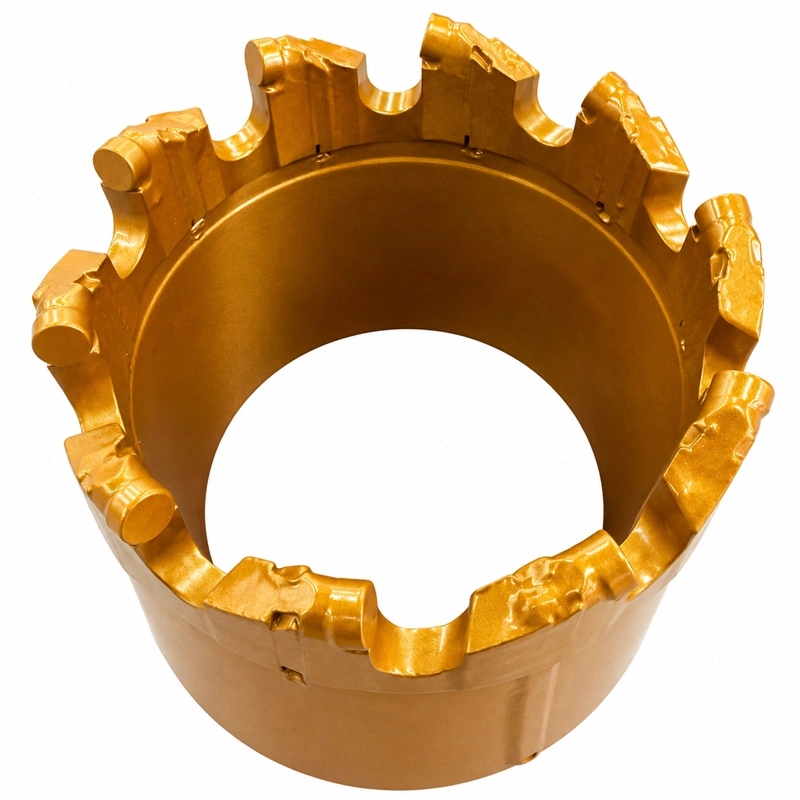
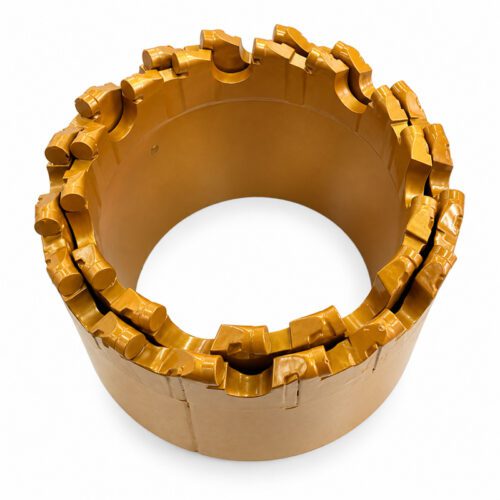
5. PDC Core Drill Bits
Unlike a full-face non-coring PDC bit, a PDC core bit cuts an annular path around the formation. This lets a cylindrical rock sample enter the core barrel.
PDC core bits are often used in geological exploration, rock sampling, mineral exploration, water well investigation, engineering geology and formation evaluation. Different cutting structures can be made for different formations.
Our PDC core bit setups include different cutter layouts and custom structures for specific geological conditions. For suitable formations, they can give a good balance of cutting efficiency, wear resistance and stable coring.
6. Customized PDC Drill Bits
Standard bits cannot solve every drilling problem. Different countries, rigs and formations often need different structures. Custom PDC bits may involve changes to:
- Diameter
- Number of blades
- PDC cutter size and grade
- Cutter quantity and layout
- Bit profile
- Waterways
- Gauge protection
- Connection
- Overall body dimensions
Customers can also send an existing bit, technical drawing, photo or sizes for review. However, the goal of customization should not simply be to copy the look of a bit. Instead, the cutting structure should be improved for the actual drilling job.
Key Advantages of PDC Drill Bits
High Cutting Efficiency
The shearing action of PDC cutters can remove rock efficiently and give high penetration rates when the formation and drilling settings are right. Because of this, faster penetration can cut the time needed to finish each hole.
Excellent Wear Resistance
The diamond layer gives strong resistance to abrasive wear. When cutter grade and structure are chosen well, the bit can keep an effective cutting edge for longer intervals. As a result, longer life can reduce bit changes, pulling and re-running the string, non-drilling time and total cost.
No Moving Bearing Components
Unlike roller cone bits, fixed-cutter PDC bits do not rely on rotating cones and bearings. Their simpler structure removes some bearing-related failure modes. However, cutter wear, impact damage, erosion and body wear still need attention.
Multiple Cutting Structures
PDC technology lets makers change the cutting structure for different jobs. Changing blade number, profile, cutter exposure and cutter density can greatly change bit behavior. Therefore, PDC technology is highly adaptable.
Customizable Sizes and Connections
PDC bits can be made in a wide range of diameters. Common sizes include:
75 mm · 91 mm · 94 mm · 108 mm · 113 mm · 133 mm · 142 mm · 152 mm · 171 mm · 245 mm · 275 mm · 300 mm · 325 mm
Other diameters can be made to order. Available connections can include common specs such as:
2 3/8 REG · 2 7/8 REG · 3 1/2 REG · 4 1/2 REG · NC23 · NC26 · NC31 · NC38 · Z-50
Connection choice depends on bit size and application. Custom threads can also be reviewed from customer drawings or samples.
Why Cutter Layout Matters
One of the most important parts of PDC design is cutter placement. Poor cutter spread can lead to:
- Uneven wear
- Cutter overload
- Too much vibration
- High torque swings
- Early cutter failure
- Lower penetration rate
A good cutting structure spreads work more evenly across the face. The layout should consider the center, cone, nose, shoulder and gauge areas, because cutters at different radial positions travel at different speeds. As a result, their workload is not the same.
In short, good bit design needs more than placing cutters symmetrically. It needs an understanding of how each cutter meets the rock during rotation.
Why Waterway Design Matters
Rock must not only be cut. It must also be removed. After the PDC cutters make cuttings, enough flushing must carry them away from the bit face.
A good hydraulic or waterway design can help:
- Remove cuttings
- Clean the cutter face
- Cool PDC cutters
- Reduce recutting
- Reduce bit balling
- Keep drilling efficient
However, poor cuttings removal can cause material to build up around the cutters. This can lower the effective cutting depth and drop penetration rate. For this reason, waterway size and position should match the formation, drilling fluid, flow rate and bit structure.
What Formations Are Suitable for PDC Drill Bits?
There is no single answer, because modern PDC structures cover a very broad range. Depending on cutter grade and design, PDC bits can be considered for:
- Clay
- Mudstone
- Shale
- Coal
- Red sandstone
- Sandstone
- Limestone
- Dolomite
- Marl
- Weathered rock
- Backfill
- Soft rock
- Medium-hard rock
- Selected harder formations
However, hardness is only one factor. Drillers should also check abrasiveness, fracture intensity, mixed layers, impact conditions, rock uniformity, depth, torque, RPM, weight on bit and flushing capacity.
For example, a formation may be fairly soft but highly abrasive. Another may be hard but uniform. These conditions may need very different cutter grades and bit structures. Therefore, describing the formation clearly before ordering is very important.
PDC Bit vs. Tricone Bit
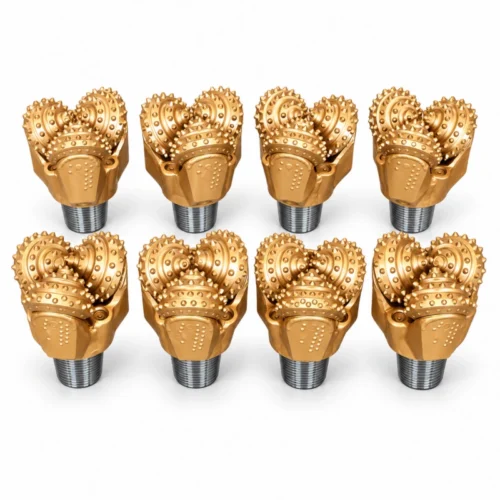
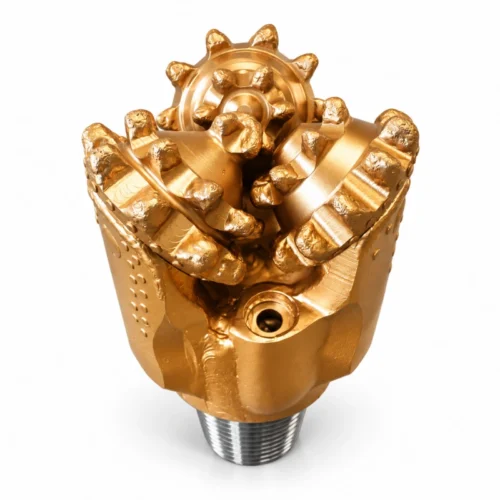
Customers often ask: should I use a PDC bit or a tricone bit? There is no single winner. They use different rock-breaking methods and perform differently under different conditions.
| Item | PDC Drill Bit | Tricone Drill Bit |
|---|---|---|
| Cutting action | Shearing | Crushing, indentation and scraping |
| Cutting parts | Fixed PDC cutters | Rotating cones with steel teeth or inserts |
| Typical strength | High penetration in suitable formations | Strong impact resistance in mixed or broken rock |
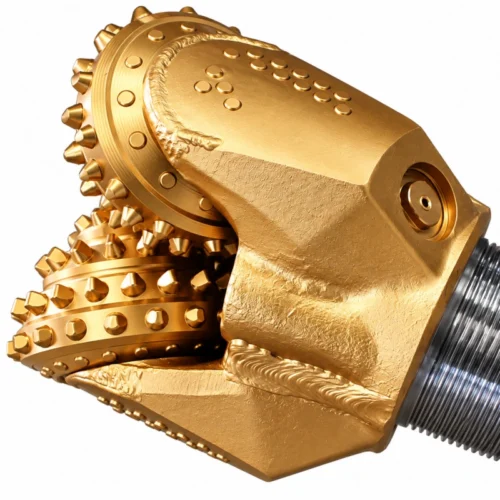
| Bearings | No cone bearings | Uses bearings |
| Best use | Soft to medium-hard, uniform formations | Hard, mixed or highly fractured formations |
Therefore, the right choice should be based on geology and drilling conditions, not on the belief that one technology is always better.
PDC Bit vs. Alloy Drag Bit
Alloy drag bits use tungsten carbide or other hard-alloy cutting parts rather than PDC cutters. For fairly soft formations, they can offer a low-cost solution.
PDC bits usually give much better cutting-edge wear resistance. However, the purchase price of an alloy bit can be lower. As a result, for easy formations and tight budgets, an alloy drag bit may still be a practical choice.
In short, the best comparison is not simply “which bit is cheaper?” Instead, ask “which bit gives the lowest cost per meter under my drilling conditions?”
Common Applications of PDC Drill Bits
PDC bits are used across many drilling industries. Typical uses include:
Water Well Drilling
PDC drag and non-coring bits can give efficient drilling in suitable sedimentary and weathered formations.
Geothermal Drilling
Custom PDC cutting structures can be chosen for the geological conditions found in geothermal boreholes.
Khảo sát địa chất
PDC core bits can recover formation samples while keeping good cutting performance in suitable formations.
Coal Mine Drilling
PDC bits can be used for gas drainage, exploration and other mine drilling work.
Anchor and Slope Drilling
PDC bits are often used for anchor holes, slope reinforcement and support-related drilling.
Grouting Holes
Fast drilling in suitable formations makes PDC bits useful for grouting and foundation engineering.
Foundation and Construction Drilling
Custom diameters and cutting structures can be supplied for different construction projects.
Mining
PDC bits can be set up for selected exploration and mining-related drilling jobs.
How to Choose the Right PDC Drill Bit
Choosing the right bit becomes much easier when the maker receives accurate drilling information. Before ordering, we suggest confirming the following:
| Item | What to Provide |
|---|---|
| Bit diameter | Exact outside diameter; tolerances if important |
| Formation | Rock name or photos of rock, cuttings or core |
| Hardness and abrasiveness | Affects cutter grade and cutter density |
| Drilling application | Water well, core, mining, anchor, grouting, etc. |
| Connection | Thread spec, drawing, photo or existing bit info |
| Drilling rig | Rig model, torque, RPM and capacity |
| Previous bit performance | Meters drilled, wear location, cutter chipping, ROP, balling, torque |
Sometimes a used bit can tell us more about the formation than a long geological report. Therefore, photos of worn bits are very useful.
Why the Lowest Bit Price Is Not Always the Lowest Drilling Cost
Professional drilling companies rarely judge tools by purchase price alone. Imagine two bits. Bit A is cheaper but needs frequent replacement. Bit B costs more but drills longer and keeps a higher penetration rate.
The true economic comparison should include:
- Purchase cost
- Meters drilled
- Penetration rate
- Bit replacement time
- Rig downtime
- Labor cost
- Fuel or energy use
- Risk of downhole problems
As a result, the key number is often drilling cost per meter, not simply price per drill bit.
Customized PDC Drill Bits From China
Different drilling markets need different solutions. A PDC bit that works well in one formation may perform very differently in another. Because of this, we support custom PDC bit manufacturing based on real project needs.
Customization can include:
- Diameter
- Blade number
- Cutter specification and quantity
- Cutter layout
- Bit profile
- Gauge structure
- Waterway configuration
- Body dimensions
- Connection
- Application-specific reinforcement
Customers can send a drawing, an existing bit, dimensional data, formation information or photos of the current tool. Our team can review the application before production.
Frequently Asked Questions About PDC Drill Bits
Can PDC drill bits drill hard rock?
Yes. Some modern PDC designs can drill fairly hard formations. However, performance depends on abrasiveness, impact conditions, cutter grade, bit design and drilling parameters. For very hard, highly abrasive or highly fractured rock, another technology may sometimes be more economical.
How many blades should a PDC drill bit have?
There is no single correct blade number. Three-, four-, five- and multi-blade setups each behave differently. Blade count should be decided by formation, diameter, cutter loading, desired aggressiveness, stability and cuttings removal needs.
What information should I provide before ordering?
At minimum, provide bit diameter, formation, drilling application and connection. For a more accurate recommendation, also add drilling depth, rig model, RPM, torque, flushing method and photos of rock or used bits.
Can you manufacture PDC drill bits according to our drawing?
Yes. Custom dimensions, structures, cutter layouts and connections can be reviewed from drawings, samples or technical requirements.
Can I send you my existing drill bit for customization?
Yes. An existing product or detailed photos can help when developing a replacement or custom setup. However, we also suggest sending formation and drilling information, so the new design can be checked against real conditions instead of simply copying the old structure.
Talk to Us Before You Choose Your Next PDC Drill Bit
A good PDC bit starts with the right understanding of the formation. Instead of simply saying “I need a 152 mm PDC bit,” tell us “I need a 152 mm bit for sandstone and limestone, drilling a 180-meter water well with this rig and this connection.”
That extra information can completely change the cutting structure we recommend.
If you are looking for PDC drill bits for water wells, geological exploration, mining, geothermal, construction, grouting or custom drilling, send us your drilling conditions. We can help review the right diameter, cutting structure, PDC cutter, blade setup, connection and waterway design.
In short, our goal is simple: choose the right drill bit for the formation before it goes into the borehole.
Need help choosing a PDC drill bit for your project? Send us your formation details, bit diameter and connection requirements. Our team will recommend a suitable blade and cutter setup.
Share your drilling method, rig parameters and any photos of the formation or existing bit. We will review your project and respond with a practical recommendation.







 English
 Chinese
 Portuguese
 French
 Spanish
 Russian
 Turkish
 Vietnamese