

Five-Blade Arc PDC Drill Bit for Hard-Rock Drilling
Field performance of a 1613 PDC cutting structure in competent hard formations
Hard-rock drilling places very different demands on a PDC drill bit compared with drilling soft shale, mudstone or loose formations. As rock strength rises, each PDC cutter faces higher cutting resistance, greater contact stress and more heat and impact load.
Because of this, a PDC bit built for harder rock cannot just use a bigger cutter or more cutters. The whole cutting system must be redesigned around:
Cutter life + Load spread + Bit stability + Gauge protection + Cuttings flow
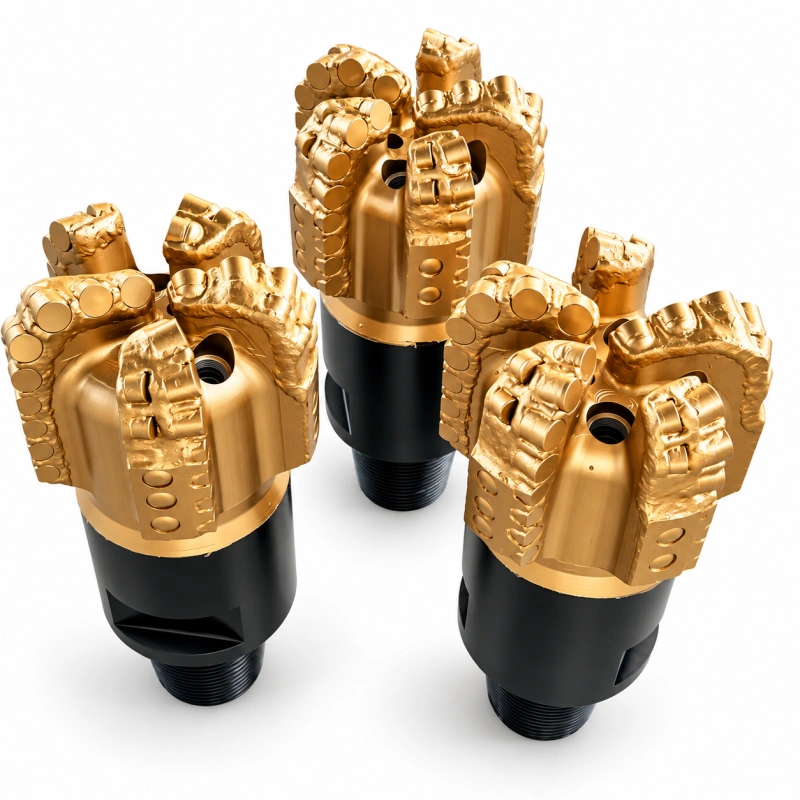
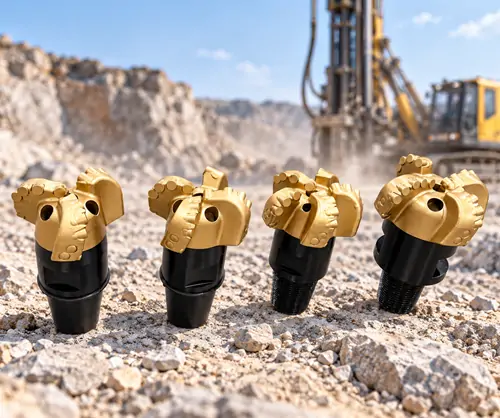
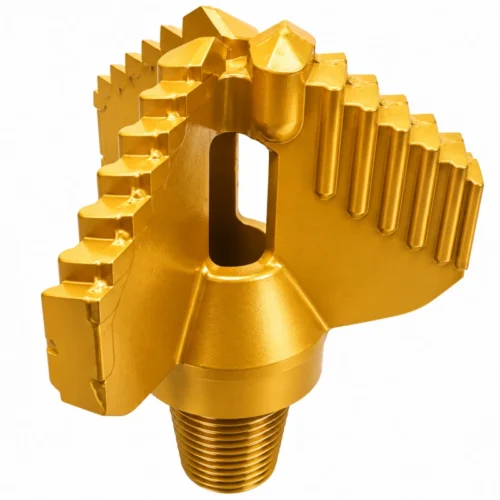
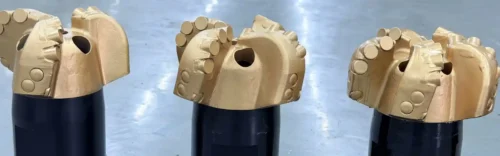
For selected hard and solid rock, Chenghui’s five-blade arc PDC drill bit uses a reinforced multi-cutter design with 1613 PDC cutters as the main cutting parts. The goal is not just fast penetration. It is to keep cutting under control, spread cutter load across five blades and protect the cutting structure over longer drilling intervals.
Quick summary: The five-blade arc PDC bit with 1613 cutters is built for hard but fairly uniform rock where steady rotary shearing still works. In short, harder rock does not always mean a bigger cutter; it means a more balanced cutting system.
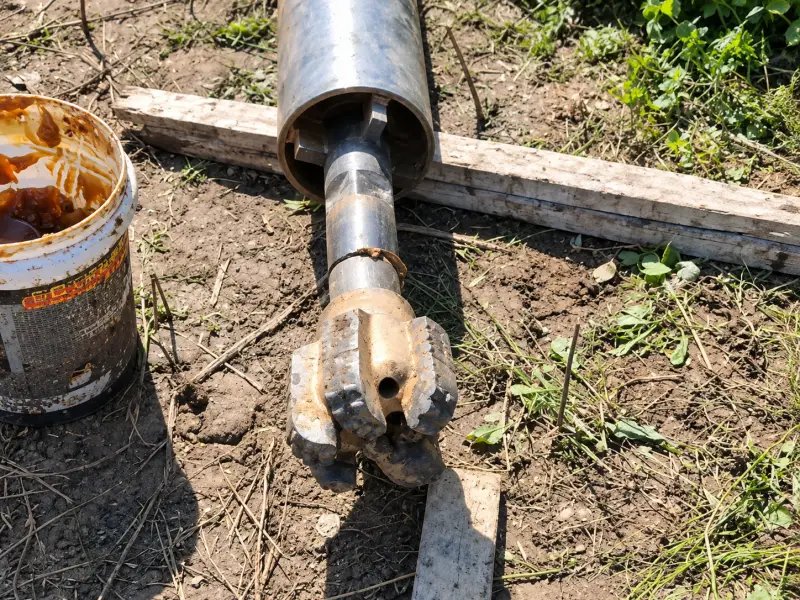
Product Configuration
The five-blade PDC bit in this case is available in a wide range of diameters.
| Nominal Diameter | Approx. Inch Size |
|---|---|
| 152 mm | 6 in. |
| 165 mm | 6-1/2 in. |
| 190 mm | 7-1/2 in. |
| 216 mm | 8-1/2 in. |
| 241 mm | 9-1/2 in. |
| 269 mm | 10-5/8 in. |
| 311 mm | 12-1/4 in. |
Depending on the diameter and required cutting structure, different combinations of PDC cutting elements can be used. The parameters show setups with 1613 primary cutters together with smaller secondary or protective PDC elements. This multi-size layout can spread cutting and protection duties across different areas of the bit.
Connections can be made to drilling-system needs, including common 3 1/2 and 4 1/2 connections. Other thread types can be reviewed against the customer’s drill string.
Why Use Five Blades for Harder Formations?
The five-blade structure is quite different from a highly aggressive three-blade drag-style PDC bit. More blades let more cutters sit around the cutting face. For hard-rock jobs, this can give several gains.
Better Cutter Load Distribution
When fewer cutters carry the whole drilling load, the force on each cutting element can get very high. By raising cutter density and spreading cutters across five blades, the cutting work can be shared better. As a result, local overload can drop.
Improved Drilling Stability
Hard rock creates higher resistance against the cutters. If the cutting structure becomes unstable, the bit may face:
- Torque swings
- Lateral vibration
- Cutter impact
- Stick-slip
- Cutter chipping
A five-blade design gives more contact points with the rock. When designed well, this can improve cutting-structure stability.
Stronger Blade Support
PDC cutters need more than wear resistance. They also need a rigid structure behind them. The blade body supports the cutters against torque and axial drilling loads. In harder rock, blade strength and cutter-pocket support become especially important.
Why 1613 PDC Cutters?
The main cutting elements in this bit are 1613 PDC cutters. The name usually refers to a cutter in the 16 mm diameter class, though the exact size and diamond-table design depend on the cutter spec and maker.
A 16 mm-class PDC cutter offers a useful mix of:
- Cutting area
- Mechanical support
- Wear resistance
- Cutter strength
- Drilling efficiency
However, using a 1613 cutter does not make a bit suitable for hard rock on its own. Real results also depend on:
- PDC grade
- Diamond-table design
- Cutter substrate
- Cutter exposure
- Back-rake angle
- Cutter layout
- Rock abrasiveness
- Drilling vibration
Industry research on hard-rock PDC cutting has shown that cutter shape and material choices directly affect cutter loads, wear and life. Because of this, we treat cutter spec as only one part of the whole bit design.
What Does “Hard Rock” Actually Mean?
This is an important difference. Customers sometimes describe rock simply as “hard rock.” However, that description is not enough for professional bit selection. Hard-rock drilling performance depends on several separate properties.
Rock Strength
How much force is needed to break the rock?
Abrasiveness
How fast does the rock wear the cutter and bit body?
Rock-Mass Integrity
Is the rock uniform and solid, or fractured and broken?
Mineral Composition
A quartz-rich formation may be much more abrasive than another rock with similar compressive strength.
Interbedding
Does the hole stay in one formation, or keep switching between hard and soft layers?
These differences can change PDC performance a lot.
About the “f > 8” Hard-Rock Range
For projects using the Protodyakonov rock-strength class, rock above about f = 8 may already mean fairly hard drilling conditions. PDC can be considered for selected rock in this range, especially where the rock is:
- Fairly uniform
- Solid
- Not heavily fractured
- Not extremely abrasive
- Good for continuous shearing
Even so, f > 8 should not be used as a blanket promise that a PDC bit will work well. As hard-rock PDC research has shown, performance depends heavily on cutter shape, material design and operating settings.
For very hard crystalline rock or highly abrasive fractured rock, a different drilling method may cost less in the end.
Note: The f value is a useful starting point, but it should never be the only factor. In short, use it as a guide, not as a fixed rule.
How the Five-Blade PDC Bit Breaks Hard Rock
PDC cutters break rock mainly by continuous shearing. As the bit turns, each cutter bites slightly into the rock surface and removes a layer. In softer rock, the cutting depth can often be fairly large. As rock strength rises, the cutting depth usually needs more control.
The goal becomes:
Keep shearing effective without putting too much impact load on the cutter edge.
Recent lab work on PDC cutters in limestone has shown again that rake angle and cutting depth affect contact stress and rock-breaking efficiency. Because of this, simply adding more weight on bit is not always the right way to raise penetration.
Arc-Blade Design and Progressive Cutter Engagement
The curved or arc-style blade shape lets the cutting structure meet the rock step by step. Rather than putting every cutter under the same load at once, the profile can spread engagement from the inner cutting area toward the shoulder and gauge.
A well-designed profile can help with:
- Smoother cutter contact
- Better load spread
- Less torque swing
- Better bit stability
- More predictable wear
This matters more and more as rock strength grows.
Primary and Secondary PDC Cutters
The parameters show that different cutter sizes can sit on the same bit. For example, a bit may use 1613 cutters as main cutting parts, together with smaller PDC elements set by design.
These extra elements can serve different roles, such as:
- Extra cutting
- Backup cutting
- Shoulder support
- Gauge protection
- Load sharing
So a modern hard-rock PDC bit should not be judged simply by asking “how many 1613 cutters does it have?” A better question is: how is the full cutting structure arranged?
Field Behavior in Competent Limestone
Hard or dense limestone is one rock type where a well-designed PDC bit can show the gain of continuous shearing. However, limestone itself varies a lot. It can range from fairly clean carbonate rock to:
- Siliceous limestone
- Fractured limestone
- Dolomitic limestone
- Cherty limestone
- Highly abrasive carbonate rock
For solid limestone with manageable abrasiveness, the five-blade structure can help keep cutter contact steady while spreading drilling load. But when chert or highly abrasive silica-rich material shows up, cutter wear can rise sharply. Because of this, the drilling team should watch changes in:
- Penetration rate
- Torque
- Vibration
- Cuttings
- Pump pressure
Drilling Hard Sandstone
Hard sandstone brings a different challenge. Its compressive strength may be manageable, while its quartz content causes severe abrasive wear. For this rock, the cutting structure should focus on:
- Cutter wear resistance
- Shoulder life
- Gauge protection
- Body wear resistance
A very aggressive bit may give great penetration at first. But if cutter edges wear fast, the average result over the whole interval can be poor. Therefore, the right measure is not just initial ROP. It is:
Average ROP + Total Meters Drilled + Cost per Meter
What About Granite?
This needs a careful answer. Modern PDC technology has moved well into harder rock, and research on hard-rock PDC drilling keeps going. Even so, solid granite, quartzite and other hard crystalline rock — especially when highly abrasive — remain tough for standard rotary PDC bits.
Current drilling guides often place PDC first in more uniform rock, while solid very hard crystalline rock often suits DTH percussion better. In the same way, rock that changes a lot or is heavily fractured may favor TCI tricone bits, depending on the project.
Because of this, we would not suggest a five-blade PDC bit for granite just because the word “granite” appears. We would first check:
- Rock hardness
- Quartz content
- Fracturing
- Borehole diameter
- Depth
- Rig
- Rotary torque
- Circulation system
- Past bit performance
Hard but Uniform vs Hard and Fractured
This difference is very important.
Hard + Uniform
A steady, continuous rock lets the PDC cutters keep fairly predictable contact. This is the better setting for a hard-rock PDC design.
Hard + Heavily Fractured
The cutter keeps entering and leaving the rock. This creates impact load. The result can be:
- Edge chipping
- Broken cutters
- High vibration
- Torque swing
- Shorter bit life
Current drill-bit guides also stress that PDC works best where continuous shearing can be kept, while fractured or highly variable hard rock needs much more care.
Why Gauge Protection Matters
As bit diameter grows from 152 mm toward 216, 241, 269 or even 311 mm, gauge life becomes more and more important. The gauge always touches the borehole wall. In abrasive hard rock, this can lead to:
- Gauge wear
- Loss of hole size
- Higher friction
- Poor clearance for later tools
Extra cutting or wear-resistant elements around the shoulder and gauge can help protect the outside diameter. For long drilling intervals, keeping gauge can be just as important as keeping the main cutter edges.
Five-Blade Bit Sizes and Typical Cutter Configurations
Based on the parameters provided, the product family covers the following sizes:
| Diameter | Primary 1613 Cutters* |
|---|---|
| 152 mm | 20 |
| 165 mm | 18 |
| 190 mm | 26 |
| 216 mm | 23 |
| 241 mm | 31 |
| 269 mm | 37 |
| 311 mm | 44 |
*The bit structures shown also use smaller PDC elements. Exact cutter count should be checked against the final production design.
This is a strong technical point. As diameter grows, the cutting structure does not just scale up. Cutter layout needs to be redesigned for the bigger cutting area and radial cutter speed.
Why More PDC Cutters Do Not Automatically Mean Better Performance
It is tempting to compare two bits by counting cutters. However, cutter count alone does not decide performance.
Too few cutters may overload each element. Too many cutters can cut depth of cut and take up useful flow area. The right design is a balance between:
Cutter density + Depth of cut + Stability + Blade strength + Cuttings flow
For hard rock, this balance matters even more.
Controlling Weight on Bit
One common mistake in hard-rock PDC drilling is thinking:
More WOB = Faster Drilling
That is not always true. Too much weight may cause:
- Cutter overload
- Higher torque
- Cutter chipping
- Stick-slip
- Higher heat
- Blade damage
A better approach is to build the working range step by step, where the bit keeps steady torque and useful penetration. When ROP falls, find the cause before adding load.
Rotary Speed Also Matters
RPM affects both cutter speed and heat. Higher RPM can raise cutting frequency. But if the bit starts to vibrate or the cutters cannot shed heat well, too much RPM can shorten cutter life.
So the best mix is not top RPM or top WOB. It is the mix that gives:
Steady cutting + Acceptable ROP + Controlled wear
Cooling and Cuttings Removal
Hard-rock drilling creates a lot of energy at the cutter-rock face. Because of this, the circulation system plays several key roles:
- Cooling PDC cutters
- Cleaning the bit face
- Removing rock pieces
- Reducing recutting
- Controlling temperature
If cuttings stay under the bit, the cutters must keep breaking material that has already been removed. This wastes energy and speeds up wear.
Reading the Bit After Drilling
The state of a used five-blade PDC bit gives useful field data.
| Wear Sign | Possible Meaning |
|---|---|
| Even wear across five blades | Fairly balanced cutter load |
| One blade wears faster | Imbalance, vibration or uneven contact |
| Chipped 1613 cutters | Impact, fractures or heavy settings |
| Heavy shoulder wear | Abrasive rock or load concentrated there |
| Gauge loss | Strong borehole-wall abrasion |
| Polished but intact cutters | Slow abrasive wear rather than impact failure |
These notes can guide the next bit design.
When a TCI Tricone Bit May Be Better
A five-blade PDC bit should not be sold as the answer to every hard-rock problem. A TCI tricone bit may suit better where the rock is:
- Highly fractured
- Strongly interbedded
- Abrasive
- Unpredictable
- Prone to repeated impact load
Tricone cutters crush and indent the rock rather than relying only on shearing. Because of this, they can handle some changing rock conditions more easily.
When DTH May Be Better
For very solid crystalline rock such as certain:
- Granite
- Quartzite
- Gneiss
- Basalt
a DTH hammer and button-bit setup may offer a better rock-breaking method. DTH uses repeated percussion right behind the bit instead of relying only on rotary shearing. Current drilling guides often favor DTH for solid hard crystalline rock when the rig and compressor can support it.
Professional drilling-tool selection means knowing when not to suggest PDC. That builds more trust than claiming one product can drill everything.
Where the Five-Blade 1613 PDC Bit Fits Best
The strongest use window for this bit is best described as:
Fairly hard, solid and reasonably uniform rock where continuous PDC shearing still holds.
Possible uses may include selected:
- Hard limestone
- Dolomite
- Dense sandstone
- Cemented sedimentary rock
- Medium-hard to hard engineering rock
- Selected geothermal formations
- Selected mining formations
For extremely abrasive, heavily fractured or very hard crystalline rock, a rock review should be done before the final bit choice.
Typical Applications
This five-blade arc PDC design can be reviewed for:
- Water-well drilling
- Geothermal drilling
- Mining drilling
- Engineering holes
- Large-diameter rotary drilling
- Exploration-related drilling
- Foundation work
The exact use depends on bit diameter, rig capacity and rock type.
How to Select the Correct Size
Bigger diameter creates a much larger cutting area. A 311 mm bit should not be treated as just a bigger 152 mm bit. As diameter grows, the project may need:
- More rig torque
- Higher flow capacity
- More cutters
- Stronger blades
- More robust gauge protection
- Different drilling settings
Before picking a large-diameter PDC bit, rig capacity must be checked.
Information Needed Before Recommending a Hard-Rock PDC Bit
For hard-rock projects, we suggest sending more data than for normal soft-rock drilling. Please provide:
- Required bit diameter
- Target depth
- Main rock type
- Rock strength or hardness data, if known
- Whether the rock is uniform or fractured
- Abrasiveness data
- Drill rig model
- Available torque and RPM
- Flushing method
- Required connection
If lab data is not available, send:
- Rock photos
- Core samples
- Drill cuttings
- Existing-bit photos
- Worn-bit photos
These can help a lot.
Why Cost per Meter Is More Important Than Bit Price
Hard-rock PDC bits are often judged poorly if customers look only at purchase price. A better formula is:
Bit Cost + Rig Time + Trips + Energy + Labor + Downtime ÷ Total Meters Drilled
A more expensive bit that keeps steady penetration and avoids one needless bit change may cost much less overall. This is especially true in deep drilling, where trip time can be a large part of the total cost.
Hard Rock Starts With Understanding the Rock.
Chenghui — Five-blade arc PDC bits matched to the formation, not the label.
1613 cutters. Multi-cutter layout. Reinforced gauge. Built for hard but uniform rock where steady shearing still works.
Frequently Asked Questions
Why use five blades instead of three for hard rock?
More blades allow more cutters to be spread around the cutting face. For hard rock, this can lower the load on each cutter, improve stability and give stronger blade support behind the PDC cutters. The result is more predictable wear over longer drilling intervals.
Does a 1613 cutter make a bit suitable for hard rock?
No. A 1613 cutter is one part of the design. Real performance also depends on the PDC grade, diamond-table design, cutter exposure, back-rake angle, cutter layout, rock abrasiveness and drilling vibration.
Can this bit drill granite?
Not automatically. Solid granite, quartzite and other hard crystalline rock can be very tough for rotary PDC bits. In these cases, DTH hammer systems or TCI tricone bits may be more suitable. A rock review should be done first.
What is the difference between hard but uniform rock and hard fractured rock?
Uniform hard rock lets the PDC cutters keep steady contact — this suits PDC well. Fractured hard rock makes the cutter enter and leave the rock again and again, which creates impact load and can chip or break cutters. Because of this, fractured hard rock needs much more care.
What information should I send for a hard-rock PDC bit quote?
Send bit diameter, target depth, main rock type, rock strength data if known, whether the rock is uniform or fractured, abrasiveness, rig model, available torque and RPM, flushing method and connection. Photos of rock, cuttings or worn bits also help a lot.
Drilling hard but uniform rock and need a five-blade arc PDC bit? Send us your rock type, bit diameter and rig details. Our team will recommend a suitable cutter layout and gauge protection.
Share your formation info, drilling depth, rig model, torque and RPM, flushing method and connection. Photos of rock or worn bits are also very useful.







 English
 Chinese
 Portuguese
 French
 Spanish
 Russian
 Turkish
 Vietnamese