

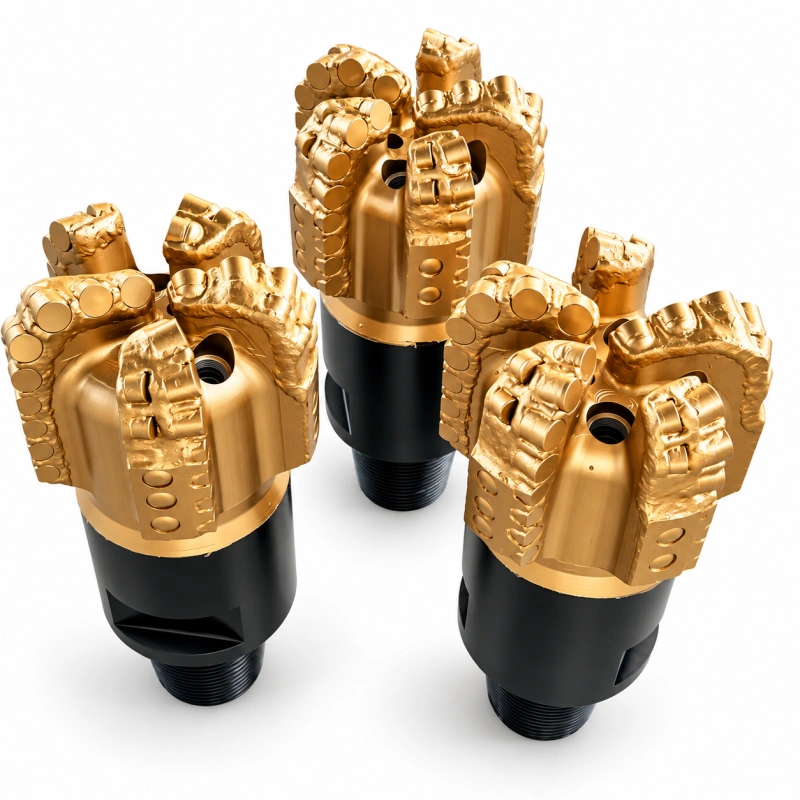
Steel-Body PDC Drill Bits for Middle East Drilling Projects
Designing PDC cutting structures for limestone, sandstone, dolomite and mixed formations
The Middle East is one of the most active drilling regions in the world. Projects cover oil and gas, water wells, geothermal exploration, mining, foundation work and other infrastructure jobs.
However, “Middle East drilling” does not mean one single geology. A project may meet limestone and dolomite in one interval, sandstone or shale in another, and mixed layers at greater depth.
Because of this, choosing a PDC bit for a Middle East project should never be based only on diameter or body material.
The more important question is: how should the cutter layout, blade structure, hydraulics and wear protection match the real formation and drilling system? Steel-body PDC bits give useful design flexibility, but their real performance comes from the full cutting system — not from the steel body alone.
Quick summary: Steel-body PDC bits offer high toughness, flexible blade shapes and large cuttings channels. However, formation type, cutter layout, hydraulics and gauge protection matter far more than body material alone. In short, match the bit to the rock, not to the region name.
Why Steel-Body PDC Bits Remain Important
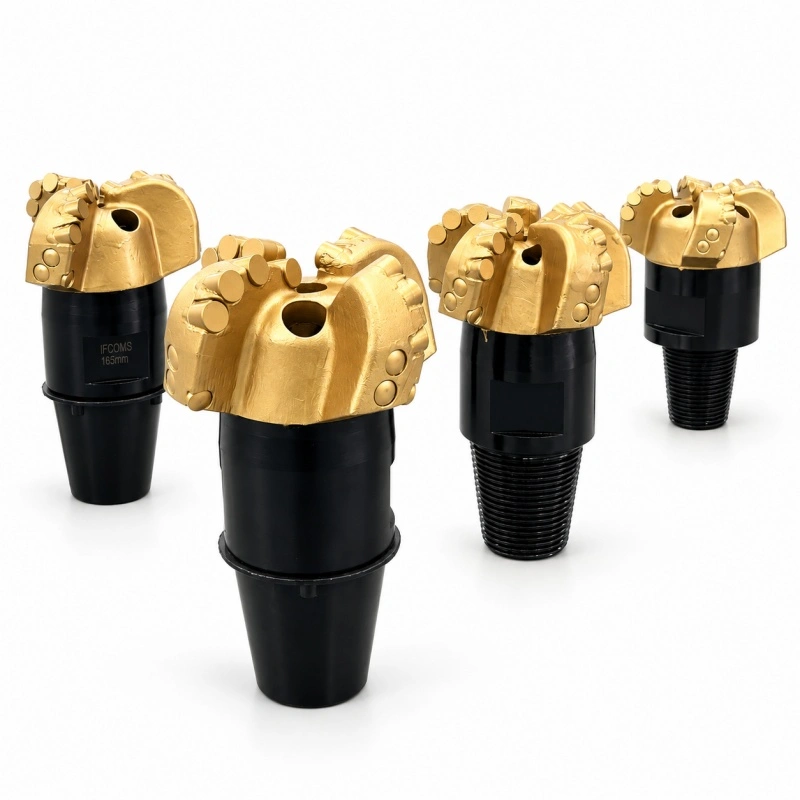
Modern PDC bits are usually made with either steel-body or tungsten-carbide matrix-body construction. Both are widely used, and each offers different engineering strengths.
Steel gives high structural toughness. Because of this, makers can machine complex blade shapes and fairly large fluid and cuttings channels. This design freedom is useful when engineers need to improve:
- Blade geometry
- Cutter placement
- Junk-slot area
- Waterways
- Gauge structure
- Bit profile
In addition, the larger open areas of some steel-body designs can help cuttings flow out in suitable jobs.
However, steel is generally less resistant to abrasion and erosion than matrix materials. For this reason, critical areas of a steel-body PDC bit may need extra wear protection or hardfacing. Therefore, the right choice should always depend on the application.
Middle East Geology Requires Formation-Specific Bit Selection
One of the biggest mistakes in bit selection is treating a whole country or region as having one type of rock. Middle East conditions vary a lot.
Common formations across different projects may include:
- Limestone
- Dolomite
- Sandstone
- Shale
- Marl
- Claystone
- Evaporite formations
- Mixed sedimentary formations
- Mixed soft and harder layers
These rocks create different challenges for PDC cutting structures. For example, uniform sedimentary rock may allow steady continuous shearing. On the other hand, fast-changing or fractured formations can bring impact, vibration and uneven cutter contact.
Therefore, the first question before making a bit should not simply be “what size PDC bit do you need?” It should be “what formation will the bit actually drill?”
PDC Performance in Limestone
Limestone is common in many drilling markets, including parts of the Middle East. However, even limestone cannot be treated as one single condition.
Its drilling behavior can change with:
- Compressive strength
- Density
- Fracture condition
- Silica content
- Abrasiveness
- Mixed material
For suitable limestone, PDC bits can give good shearing action and strong penetration. However, as strength, abrasiveness or impact rise, cutter grade and cutting structure matter more and more.
Because of this, the designer may need to adjust cutter size, cutter density, back rake, blade count, bit profile and gauge protection. The goal is to keep penetration high without placing too much impact or heat on single cutters.
Drilling Dolomite
Dolomite can present harder conditions than softer sedimentary rock. Depending on its structure and hardness, it may need a stronger cutting setup.
For these formations, simply making the bit more aggressive is not always the right fix. A good design may need greater attention to:
- Cutter load
- Impact resistance
- Blade stability
- Gauge durability
- Drilling vibration
When customers give accurate geological information before production, the bit structure can be matched better to these conditions.
PDC Bits for Sandstone
Sandstone varies a lot. Some sandstone is fairly easy to drill. However, other sandstone holds a lot of quartz and can be highly abrasive.
This distinction is very important. A formation can be moderate in strength but still wear a bit fast because of abrasive minerals. For abrasive sandstone, bit selection should consider not only penetration rate but also:
- Cutter wear resistance
- Shoulder protection
- Gauge wear
- Body erosion
- Expected drilling interval
In short, the fastest bit in the first few meters is not always the most economical bit across the whole hole.
Shale and Efficient Cuttings Evacuation
Shale drilling brings a different problem. Some shale can be drilled well with aggressive PDC structures. However, reactive or sticky shale may cause cuttings build-up and bit balling.
When cuttings pack between the blades, the PDC cutters can lose effective contact with fresh rock. Because of this, penetration drops even when the cutters themselves are still in good shape.
This is where steel-body design freedom helps. Larger junk slots and better blade spacing can give more room for cuttings to move. The hydraulic design must then work with these channels to carry material away from the cutting face. As a result, modern steel-body PDC development keeps focusing on this link between blade shape, hydraulics and cuttings flow.
Cutter Layout Matters More Than Cutter Quantity
A common misunderstanding is: more PDC cutters = better bit. That is not always true.
Adding cutters can improve load spread and durability in some jobs. However, too many cutters can also:
- Reduce cutter bite
- Reduce open flow area
- Block cuttings flow
- Change torque response
- Raise cost without improving performance
Because of this, good PDC design is a balance between cutter density and cutter efficiency. Every cutter should have a reason for its position. The layout needs to consider radial position, cutting speed, cutter exposure, back rake, formation strength, abrasiveness, expected vibration and load spread.
Cutters near the center and cutters near the gauge do not work under the same conditions. Therefore, professional cutter placement is far more complex than spacing cutters evenly along the blade.
Blade Count: More Is Not Always Better
Steel-body PDC bits can be made with different blade setups. Depending on diameter and application, designs may include 3-blade, 4-blade, 5-blade, 6-blade or multi-blade layouts.
Lower blade counts usually give more open space between blades and a more aggressive cut. More blades allow more cutters across the face and can improve stability and load spread. However, extra blades also take up space.
So the maker must balance:
Cutting Structure + Stability + Cuttings Evacuation
In short, there is no single blade count that fits every Middle East project.
Why Hydraulics Are Critical
PDC cutters cannot work well if fresh rock cannot leave the bottom of the hole. The hydraulic system has several important jobs:
Clean the Cutting Structure
Fresh cuttings must be removed so the cutters can keep biting new rock.
Cool the Cutters
Fluid flowing across the cutting face helps control cutter temperature.
Transport Cuttings
Broken rock must move through the blade channels and away from the bit.
Reduce Recutting
When cuttings stay under the bit, energy is wasted breaking material that has already been removed.
For this reason, nozzle position, waterway shape and junk-slot design should all be treated as part of the cutting system. Meanwhile, modern PDC development uses hydraulic modeling more and more to reduce dead flow zones, improve cleaning and control erosion.
High Temperature: What Really Matters?
Middle East projects are often linked with high temperatures. However, it is important to separate two different things:
- High ambient desert temperature
- High downhole drilling temperature
They are not the same engineering problem. A steel body does not automatically make a PDC bit suitable for hot downhole conditions.
PDC performance at high downhole temperature depends on several factors, including cutter thermal stability, cutter quality, frictional heat, hydraulic cooling, drilling settings, formation and bit design. Too much heat at the cutter-rock face can speed up cutter damage.
Because of this, good fluid flow and correct drilling settings stay critical. The key message should be: high-temperature performance comes from an engineered drilling system, not simply from choosing a steel body.
Tip: Desert heat and downhole heat are often confused. In other words, check actual bottom-hole temperature before choosing a bit for “hot” conditions.
Steel Body vs Matrix Body PDC Bits
Customers often ask which PDC body is better. The answer depends on the project.
| Item | Steel Body | Matrix Body |
|---|---|---|
| Toughness | High | Moderate |
| Blade shape freedom | High | Lower |
| Junk-slot area | Generally larger | Generally smaller |
| Abrasion resistance | Lower, can be improved with hardfacing | High |
| Erosion resistance | Lower | High |
| Best use | Cuttings flow, flexible design | Abrasive and erosive conditions |
Because of this, professional teams should not ask “which material is always better?” Instead, they should ask “which body and cutting structure gives the best balance for our formation?”
Gauge Protection for Abrasive Formations
The outer diameter of a bit always touches the borehole wall. If the gauge wears early, the bit may lose diameter and drilling quality can drop.
Because of this, gauge design is especially important in abrasive formations. Depending on the product, protection may include:
- Wear-resistant materials
- Tungsten carbide elements
- Extra PDC protection
- Hardfacing
- Reinforced gauge pads
The right solution depends on bit design and drilling conditions. In short, protecting the gauge lets the cutting structure keep the required hole size for a longer interval.
The Importance of Drilling Stability
A premium PDC cutter can still fail fast if the bit runs under heavy vibration. Common instability problems include:
- Stick-slip
- Lateral vibration
- Bit whirl
- Torque swings
- Impact load
These conditions can raise cutter damage and lower efficiency. Because of this, modern PDC work does not focus only on harder cutters.
Designers also work on cutter placement, force balance, blade shape, depth-of-cut behavior, bit profile and gauge structure. The goal is a cutting system that removes rock well while keeping steady contact with the formation.
Steel-Body PDC Bits for Water Well Drilling in the Middle East
The Middle East is not only an oil and gas market. Water-well development is also an important drilling activity in many countries across the region.
Water-well teams may meet combinations of:
- Sandstone
- Limestone
- Clay
- Shale
- Dolomite
- Weathered formations
For suitable formations, PDC bits can give fast penetration and steady continuous drilling. However, water-well drilling economics are often tighter than oil and gas budgets. As a result, cost per meter matters even more than bit price.
For these projects, steel-body PDC bits with open blade channels, good gauge protection and matched hydraulics can give a strong balance between speed, life and cost. In addition, custom diameters and connections can be made to fit local rigs.
Because of this, water-well contractors in the Middle East often benefit from a bit designed around the actual formation, not around a standard catalogue model.
Frequently Asked Questions
Why choose a steel-body PDC bit over a matrix-body bit?
Steel bodies offer high toughness, flexible blade shapes and larger cuttings channels. Because of this, they suit projects where cuttings flow, blade geometry and design flexibility matter. Matrix bodies offer better abrasion and erosion resistance, so they suit abrasive or erosive conditions.
Are steel-body PDC bits suitable for Middle East formations?
Yes, for suitable formations. Steel-body PDC bits work well in limestone, sandstone, shale, dolomite and mixed layers when the cutter layout, hydraulics and gauge protection are matched to the actual rock. Formation details matter far more than the region name.
Do more PDC cutters always mean better performance?
No. More cutters can improve load spread, but they can also reduce open flow area and block cuttings flow. Good PDC design balances cutter density with cutter efficiency and cleaning capacity.
Does a steel body make a PDC bit suitable for high temperature?
No. Desert heat and downhole heat are different problems. High-temperature PDC performance depends on cutter thermal stability, quality, frictional heat, hydraulic cooling, drilling settings and bit design — not on body material alone.
What information should I provide before ordering a steel-body PDC bit?
Provide bit diameter, formation type, drilling application, connection, rig model and current bit performance. Photos of the rock, cuttings or a used bit also help a lot for accurate selection.
Conclusion: Match the Cutting System to the Formation
Steel-body PDC bits give valuable design freedom, but their real value comes from the full cutting system: cutter layout, blade shape, hydraulics, gauge protection and body design, all matched to the actual formation.
In short, a Middle East drilling project does not need “a Middle East bit.” It needs the right cutting structure for limestone, sandstone, dolomite, shale or mixed layers — and for the rig that will run it.
Because of this, the best starting point is clear information from the drilling site. With accurate formation and equipment data, a steel-body PDC bit can be designed to fit the job instead of being forced into it.
Drilling in the Middle East and need a steel-body PDC bit matched to your formation? Send us your geology, bit diameter and rig details. Our team will recommend a suitable cutting structure.
Share your formation description, drilling method, bit diameter and connection requirements. Photos of rock, cuttings or used bits are also very useful.







 English
 Chinese
 Portuguese
 French
 Spanish
 Russian
 Turkish
 Vietnamese